
Generative AI in Marketing: When to Use It and When to Stay Human

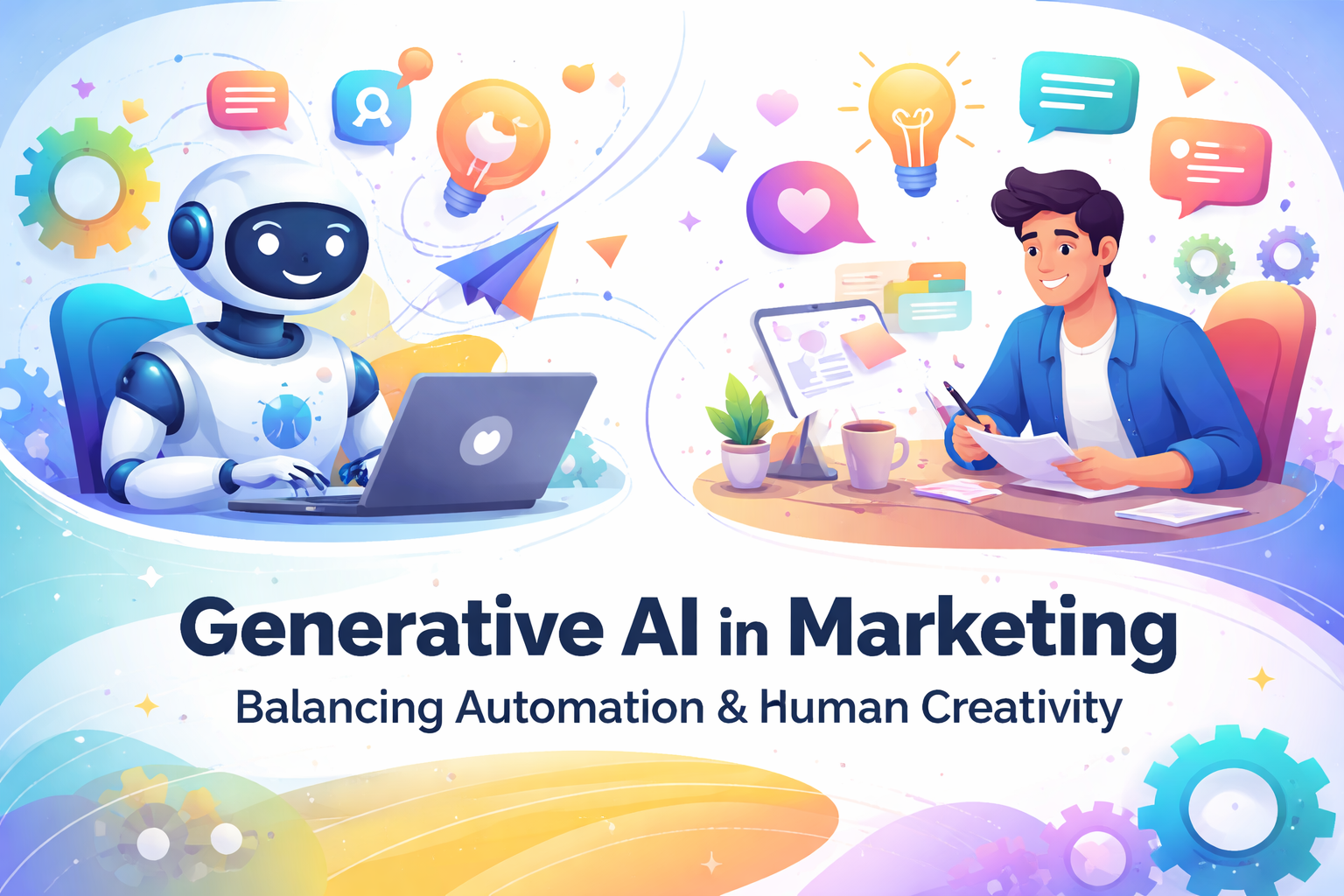
Generative AI has quickly become a powerful force in modern marketing. From writing social media captions and email campaigns to generating ad copy and blog drafts, AI tools promise speed, efficiency, and scalability. However, as brands rush to adopt automation, a critical question emerges: when should marketers rely on AI, and when should they stay human?
The answer lies in balance. While AI can enhance productivity, human creativity remains essential—especially when it comes to protecting and strengthening your brand voice. This blog explores how marketers can use generative AI wisely without losing authenticity, emotional connection, or brand identity.
Table of Contents
Understanding Generative AI in Marketing
Generative AI refers to systems that can create content such as text, images, videos, and even music based on prompts and data. In marketing, these tools are often used to:
-
Draft blog articles and landing page copy
-
Generate ad headlines and descriptions
-
Create social media posts at scale
-
Personalize email marketing content
-
Analyze customer data and suggest messaging
The appeal is obvious. AI saves time, reduces manual effort, and allows teams to produce content faster than ever. However, speed alone does not guarantee effectiveness—especially if the content feels generic or disconnected from the brand.
Where Generative AI Works Best
AI excels in areas where structure, repetition, and data-driven logic matter more than emotional depth.
Content Ideation and First Drafts
Generative AI is highly effective for brainstorming blog topics, outlining articles, and creating first drafts. It helps marketers overcome writer’s block and accelerate the content pipeline. At this stage, AI acts as a creative assistant rather than a replacement.
Data-Driven and Informational Content
AI performs well when producing factual, SEO-focused, or instructional content. Product descriptions, FAQs, meta descriptions, and technical explainers are ideal use cases. As long as the information is reviewed for accuracy, AI can significantly reduce workload.
Personalization at Scale
AI enables personalized marketing messages based on customer behavior, preferences, and demographics. This is especially useful for email campaigns, retargeting ads, and e-commerce recommendations, where human-level personalization would be impossible at scale.
Where Humans Should Stay in Control
Despite its capabilities, AI lacks emotional intelligence, lived experience, and cultural sensitivity—qualities that are crucial for strong branding.
Defining and Protecting Brand Voice
Your brand voice is the personality of your business expressed through words. It reflects your values, tone, and emotional style—whether professional, friendly, bold, or empathetic. AI can mimic language patterns, but it cannot truly understand your brand’s identity.
Human marketers must define the brand voice and ensure every piece of content aligns with it. Without human oversight, AI-generated content risks sounding generic or inconsistent.
Storytelling and Emotional Connection
Great marketing is built on stories that resonate with people. Brand origin stories, customer success stories, and purpose-driven campaigns require empathy and emotional nuance. These are areas where human creativity outperforms automation.
Ethical Judgment and Cultural Sensitivity
AI does not fully understand social context, ethics, or cultural nuances. Human judgment is essential when addressing sensitive topics, social issues, or audience emotions. One poorly worded AI-generated message can damage trust and reputation.
Balancing Automation with Creativity
The most effective marketing strategies combine AI efficiency with human insight. Here’s how to strike the right balance:
Use AI as a Tool, Not a Voice
AI should support your marketing team, not replace it. Let AI generate ideas, drafts, and variations—but allow humans to refine, personalize, and approve the final content to ensure it reflects your brand voice accurately.
Create Brand Voice Guidelines
Clear brand voice guidelines help both humans and AI stay consistent. Document your tone, vocabulary preferences, emotional style, and messaging principles. When prompting AI, include these guidelines to improve alignment.
Human Editing Is Non-Negotiable
Every AI-generated output should be reviewed and edited by a human. This step ensures accuracy, emotional relevance, and alignment with brand values. Editing is where creativity and authenticity come to life.
Measure Quality, Not Just Speed
While AI improves efficiency, success should still be measured by engagement, trust, and conversion—not just output volume. Content that feels human and authentic performs better over the long term.
The Future of AI and Brand Voice
As generative AI continues to evolve, it will become more context-aware and customizable. However, brands that rely entirely on automation risk blending into a sea of similar-sounding content.
The brands that stand out will be those that use AI strategically—leveraging its power while preserving the human elements that define their brand voice. Creativity, empathy, and authenticity will remain irreplaceable assets in marketing.
Generative AI is transforming marketing, but it is not a substitute for human creativity. Knowing when to use AI and when to stay human is the key to success. Automation can enhance efficiency, but your brand voice, storytelling, and emotional connection must remain human-led.
By balancing AI-driven automation with thoughtful human creativity, marketers can build scalable, consistent, and authentic campaigns that resonate deeply with their audience—now and in the future.

Chinnu Sunny
Chinnu Sunny is an Wordpress Web Designer at Upgraderz