
Short-Form Video & Immersive Content Strategies for 2026 Audiences

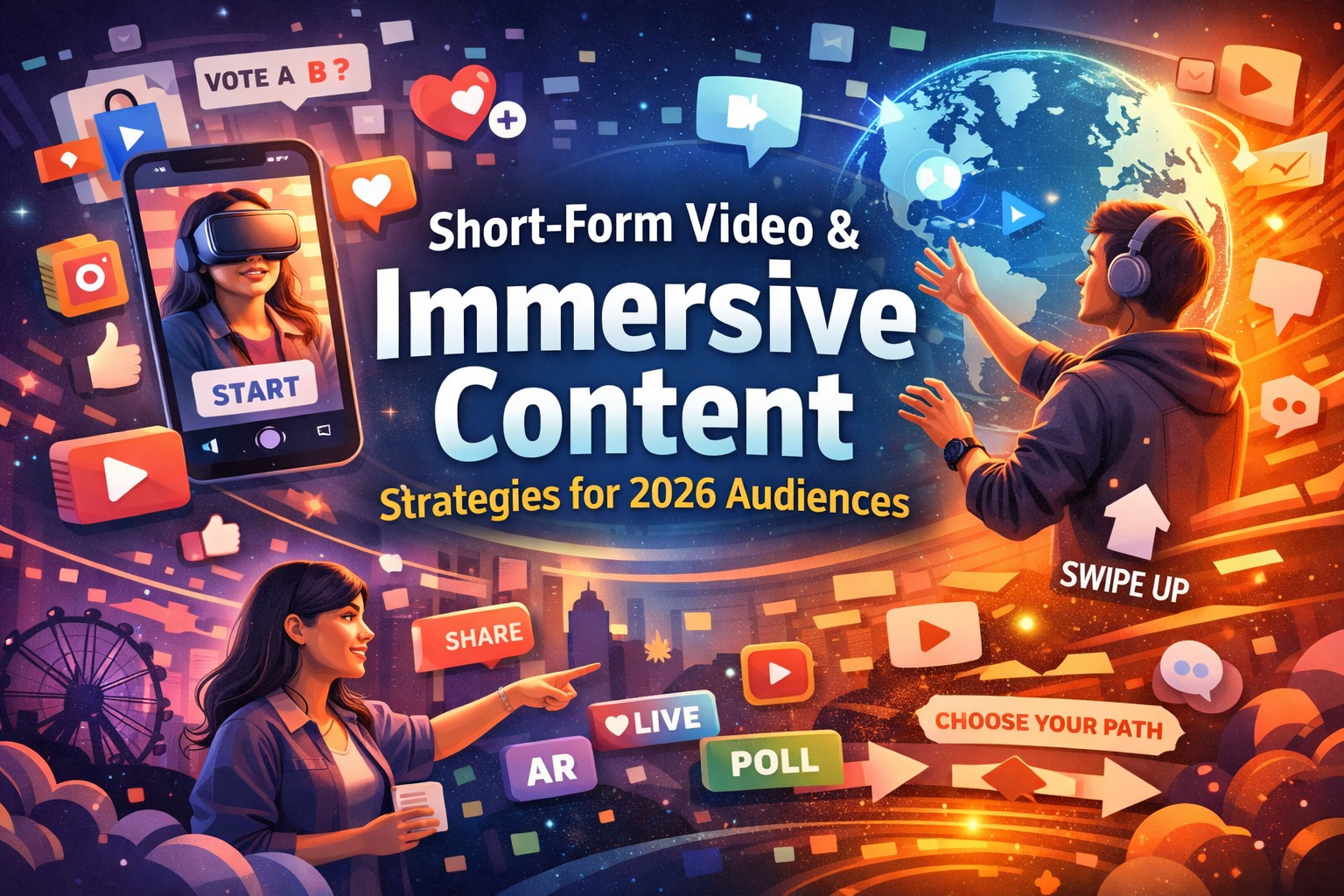
In 2026, digital audiences are no longer satisfied with passive videos that simply scroll by. They want experiences — moments that engage the senses, invite participation, and resonate emotionally. This shift has propelled immersive content to the center of modern digital strategies, especially within short-form video formats such as Instagram Reels, YouTube Shorts, TikTok clips, and interactive Stories.
Short-form video continues to dominate social media feeds — capturing attention in quick bursts while opening the door for deeper engagement strategies. According to industry observations, short videos will continue to lead user engagement in 2026, driven by mobile-native consumption, attention-short audiences, and sharing culture.
Table of Contents
Why Immersive Content Matters in 2026
For brands, creators, and marketers, mastering immersive content is no longer optional. It’s a strategic necessity for standing out in feeds where every second matters.
Attention Has Become a Premium
With shrinking attention spans, audiences now demand videos that hook instantly and deliver value quickly. These videos—usually between 10–60 seconds—must immerse viewers from the first moment with powerful visual storytelling, kinetic text, and dynamic pacing. Vertical storytelling techniques make each second count — creating narratives that feel designed for mobile consumption.
Immersive Content Builds Deeper Engagement
“Immersive content” refers to any piece of media that pulls audiences into an experience, making them feel part of the story rather than just observers. In short-form video, this means:
-
Interactive features like polls, quizzes, and clickable stickers
-
Branching narratives or choose-your-adventure formats
-
Augmented Reality (AR) elements and 3D overlays
-
Live engagement with viewer participation
These techniques encourage audiences to not just watch but participate — now a core driver of engagement metrics across platforms.
Top Short-Form Video Trends That Amplify Immersive Content
Understanding 2026 trends will help creators build content that feels alive, dynamic, and personally relevant.
Interactive Storytelling Is Exploding
Interactive storytelling allows audiences to make choices, answer questions, or influence outcomes. This transforms passive consumption into a dialogue — turning viewers into participants.
For example:
-
Instagram Stories with “tap to choose the ending?”
-
TikTok polls embedded in looping clips
-
YouTube Shorts that guide viewers through short narratives
This style of immersive content increases watch time and builds emotional connection, which correlates with higher engagement and sharing.
Shoppable & Social Commerce Integration
Short-form videos are no longer only for entertainment — they’re becoming commerce engines. Brands are integrating in-video shopping tags, AR try-ons, and direct checkout options. This frictionless experience allows “See — Tap — Buy” moments without leaving the platform, making immersive content both engaging and highly effective for conversion.
AR and 3D Story Elements
Augmented Reality is now mainstream in short videos — from virtual try-ons to immersive product demos and environmental overlays. AR helps blend digital elements into real spaces, deepening the experience and capturing attention in a way static videos cannot.
Collaborative and Community-Driven Content
Audiences want to be seen and heard. Short-form platforms increasingly support collaborative content — such as TikTok duets, stitches, and reaction clips — which empower the community to build on each other’s stories. This makes content feel shared and organic rather than broadcasted.
Dynamic Accessibility Features
To make content truly immersive for all audiences, advanced accessibility features like automatic subtitles, dynamic text highlights, and visual cues are becoming standard. These enhancements increase reach and ensure videos are engaging even without sound — ideal for on-the-go consumption.
AI-Driven Personalization
AI is reshaping how short-form videos are created and delivered. From generating scripts and visuals to optimizing narrative hooks based on user behavior, AI tools enable creators to tailor immersive content to audience preferences, boosting relevance and retention.
Practical Strategies for Creating Immersive Short-Form Videos
Now that we know what’s trending, let’s unpack practical steps to apply immersive content strategies in 2026.
Start With a Strong Hook
The first 3–5 seconds determine whether a viewer scrolls away or stays. Use intriguing visuals, surprising questions, or bold statements to spark curiosity. Open with a challenge, a bold claim, or a quick preview of the story.
Make Content Interactive
Use native features:
-
Polls and quizzes in stories
-
“Choose your own outcome” series
-
Live Q&A segments
These small interactive touches make viewers part of the narrative.
Embed AR & 3D Effects
Even basic AR filters or 3D layers can make content more immersive. Fashion brands might offer virtual try-ons, travel creators can add location overlays, and product demos can include 3D annotations.
Repurpose & Remix for Platforms
Different platforms reward different behaviors:
-
TikTok thrives on remixing sounds and trends
-
Reels favors vertical storytelling
-
Shorts can act as a gateway to deeper content
Tailor your immersive content format for each platform’s strengths.
Measure What Matters
Track engagement beyond views — such as interactions, click-through rates, shares, and story progressions. These metrics reflect true immersion and audience involvement, not just passive consumption.
Final Thought: Immersive Content Is the Future of Storytelling
In 2026, immersive content isn’t a buzzword — it’s the expectation. Audiences crave experiences that feel personal, participatory, and emotionally resonant. Short-form video formats like Reels, Shorts, and interactive Stories are the perfect vehicles to deliver these experiences, blending narrative, technology, and community in ways traditional ads never could.
To thrive in this landscape, brands and creators must embrace strategies that:
✔ Grab attention immediately
✔ Invite interaction and participation
✔ Use AR, AI, and storytelling to deepen engagement
✔ Deliver value in every frame
When done right, immersive content doesn’t just get watched — it gets felt, shared, and remembered — the true goal of content in 2026.
If you want, I can also draft SEO-ready sections, add suggested headlines, meta description, and keyword distrib
As digital consumption continues to evolve, 2026 is shaping up to be the year where short-form video and immersive content fully redefine audience engagement. Platforms like Instagram Reels, YouTube Shorts, TikTok, and interactive Stories are no longer just entertainment tools — they are powerful storytelling ecosystems. Audiences today want more than quick visuals; they want experiences that feel personal, interactive, and emotionally engaging.
This growing demand has made immersive content a key pillar of modern content strategy. Brands, creators, and marketers who adapt to this shift will capture attention, build loyalty, and stand out in increasingly crowded feeds.
Why Immersive Content Is Essential in 2026
The digital audience of 2026 is highly selective. With endless content available at their fingertips, users scroll fast and decide even faster. Traditional videos that simply “tell” a story are being replaced by immersive content that invites users to be part of the story.
Immersive content works because it:
-
Creates emotional connections
-
Encourages interaction rather than passive viewing
-
Increases watch time and engagement
-
Feels native to mobile-first platforms
Short-form video formats are the perfect environment for immersive storytelling because they combine speed, creativity, and interactivity in a format designed for modern behavior.
The Evolution of Short-Form Video
Short-form videos are no longer just quick clips with background music. In 2026, they are:
-
Story-driven
-
Experience-based
-
Community-powered
Reels, Shorts, and TikTok videos now integrate interactive tools such as polls, reactions, AR filters, clickable elements, and live participation. These features transform videos into immersive content experiences rather than one-way broadcasts.
Key Immersive Content Trends for 2026
Interactive Storytelling Takes the Lead
Interactive storytelling allows viewers to influence the narrative. Instead of watching a story unfold, users can:
-
Vote on outcomes
-
Choose the next scene
-
Answer questions that guide the content flow
This format makes immersive content more engaging because audiences feel involved, not targeted. Interactive storytelling also increases repeat views, as users return to explore different paths or outcomes.
Micro-Narratives with Emotional Impact
In 2026, storytelling is compressed but powerful. Creators are using 15–60 second videos to deliver complete micro-stories with:
-
Clear beginnings
-
Emotional tension
-
Memorable endings
Immersive content thrives when these stories feel relatable and human. Authentic emotions, real experiences, and behind-the-scenes moments perform better than overly polished productions.
Augmented Reality as a Standard Feature
Augmented Reality (AR) has become a core element of immersive content strategies. AR is no longer a novelty — it’s an expectation.
Common AR use cases include:
-
Virtual product try-ons
-
Interactive brand filters
-
Real-world overlays with digital elements
-
Gamified story experiences
AR enhances short-form video by making the audience feel present inside the content rather than watching from the outside.
Shoppable Short-Form Videos
Short-form video is now directly connected to purchasing behavior. In 2026, immersive content often includes seamless shopping experiences where users can:
-
Explore products within the video
-
Interact with features or demos
-
Complete purchases without leaving the platform
This integration removes friction and turns immersive content into a powerful conversion tool while maintaining entertainment value.
Community-Driven and Collaborative Content
Audiences trust people more than brands. Collaborative content formats such as duets, reactions, and stitched videos make immersive content feel shared rather than promotional.
By encouraging user participation, brands and creators can:
-
Build stronger communities
-
Extend content lifespan
-
Create organic reach through audience contributions
Community involvement transforms content into a two-way relationship, which is essential for long-term engagement.
AI-Enhanced Personalization
Artificial intelligence plays a major role in shaping immersive content in 2026. AI tools help creators:
-
Personalize content based on viewer behavior
-
Optimize hooks and storytelling flow
-
Adapt video formats for different platforms
-
Improve audience targeting and relevance
When combined with human creativity, AI enables immersive content that feels tailored and timely rather than generic.
How to Build Effective Immersive Content Strategies
Capture Attention Instantly
The first few seconds determine success. Start with:
-
A bold question
-
A surprising visual
-
A relatable moment
-
A clear promise of value
Strong hooks pull viewers into the experience immediately.
Design for Interaction
Use platform-native features such as:
-
Polls and quizzes
-
Clickable stickers
-
Call-to-action prompts
-
Comment-driven storytelling
Every interaction increases immersion and strengthens audience connection.
Think Mobile-First
Immersive content must be optimized for vertical viewing. Clear visuals, readable text, and fast pacing are essential for mobile audiences who consume content on the move.
Repurpose Without Repeating
While the core message can remain consistent, adapt immersive content for each platform’s unique behavior. Tailoring storytelling styles improves performance and keeps content fresh.
Measure Engagement, Not Just Views
True immersion is reflected in:
-
Watch time
-
Interactions
-
Shares
-
Saves
-
Click-through actions
These metrics reveal how deeply audiences connect with the content.
The Future of Immersive Content
By 2026, immersive content is no longer optional — it is the standard for digital communication. Short-form video platforms have become storytelling hubs where creativity, technology, and human connection intersect.
Brands and creators who succeed will be those who:
-
Focus on experience over promotion
-
Invite participation instead of broadcasting messages
-
Blend storytelling with interactivity
-
Embrace innovation without losing authenticity
When done right, immersive content doesn’t just attract attention — it builds trust, loyalty, and lasting impact. In a fast-scrolling world, the most immersive stories are the ones that truly stay with the audience.

Chinnu Sunny
Chinnu Sunny is an Wordpress Web Designer at Upgraderz
- Chinnu Sunny
- Chinnu Sunny
- Chinnu Sunny
- Chinnu Sunny
- Chinnu Sunny
- Chinnu Sunny
- Chinnu Sunny
- Chinnu Sunny
- Chinnu Sunny
- Chinnu Sunny
- Chinnu Sunny