
Beyond the Click: Mastering GEO (Generative Engine Optimization) in 2026

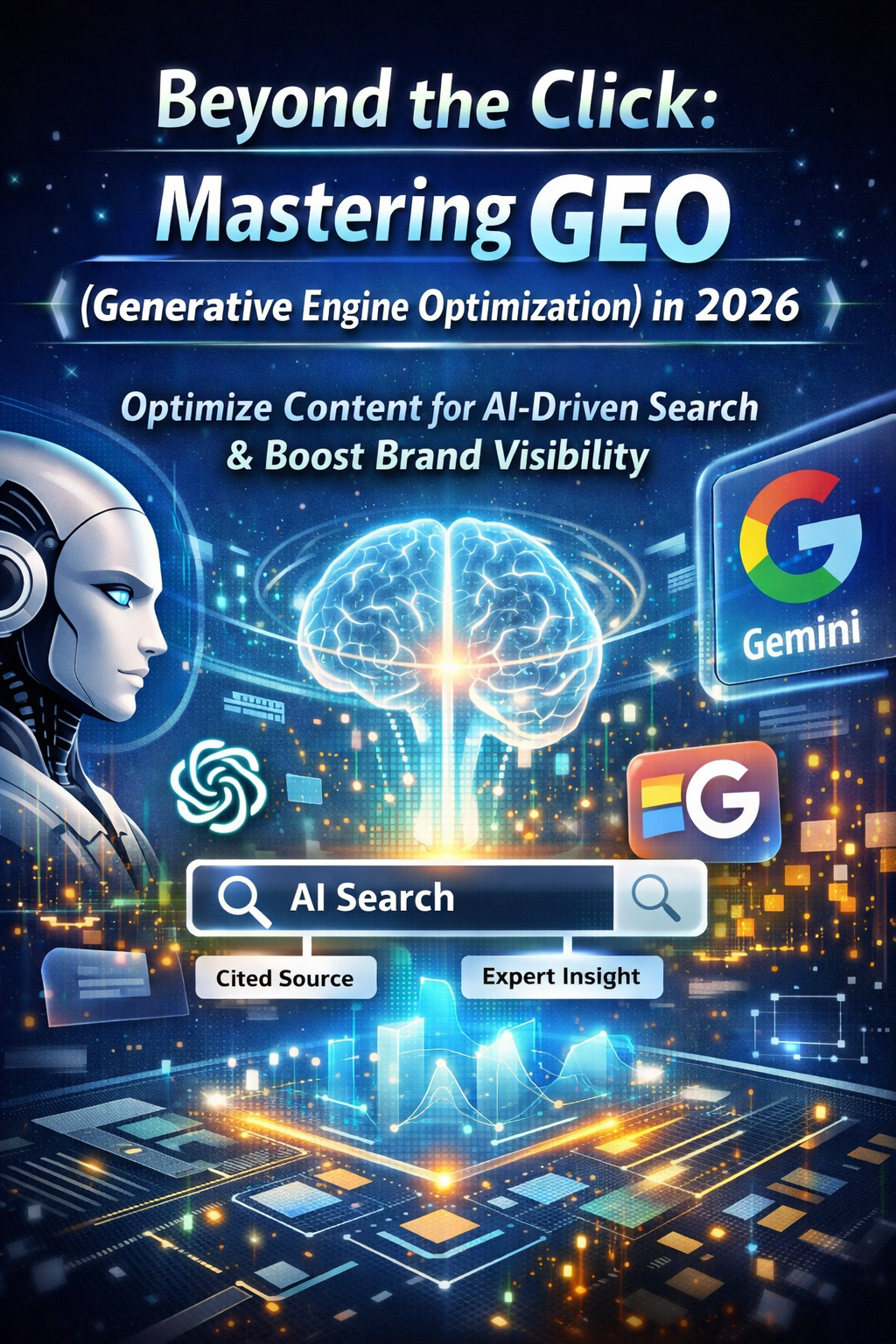
Digital discovery is changing faster than ever. For years, businesses focused on ranking on page one of search engines. But in 2026, the game is shifting from clicks to citations. With users increasingly relying on AI-driven answers from tools like ChatGPT, Gemini, and AI-powered Google results, GEO (Generative Engine Optimization) is becoming the next big frontier in online visibility.
Instead of optimizing only for search engine rankings, brands must now optimize their content to be selected, summarized, and cited by AI systems. This is where GEO becomes essential.
In this blog, you’ll learn what GEO is, why it matters in 2026, and how to optimize your content strategy to win visibility beyond the click.
Table of Contents
What Is GEO (Generative Engine Optimization)?
GEO (Generative Engine Optimization) is the practice of optimizing content so that AI-driven search and answer engines can easily understand, trust, and reference it in their generated responses.
Traditional SEO focuses on:
-
Rankings
-
Keywords
-
Backlinks
-
Click-through rates
GEO focuses on:
-
AI citations
-
Structured knowledge
-
Authority signals
-
Context clarity
-
Answer-ready content
When users ask AI a question, they often receive a direct answer instead of a list of links. If your content is structured and authoritative enough, AI systems may use it as a source. That means your brand becomes part of the answer — even if the user never clicks a link.
Why GEO Is Critical in 2026
Industry projections suggest that traditional search volume is dropping significantly as users move toward AI-assisted discovery. Instead of typing short keywords, people now ask full questions and expect instant summaries.
Key shifts driving GEO adoption:
-
Users prefer conversational search
-
AI summaries reduce website clicks
-
Zero-click answers are increasing
-
Voice and chat-based queries are growing
-
AI tools act as “decision engines”
For forward-thinking agencies and brands, GEO is not optional. It is the next layer of visibility strategy. Businesses that prepare now will gain early authority in AI-generated answers.
How GEO Differs From Traditional SEO
While GEO and SEO work together, they are not the same.
SEO asks: How do I rank higher?
GEO asks: How do I become the trusted source AI selects?
SEO success may bring traffic.
GEO success brings authority and mentions inside AI answers.
SEO depends heavily on search engine algorithms.
GEO depends on machine understanding and content clarity.
In short, SEO gets you found. GEO gets you quoted.
How AI Engines Choose Content
To optimize for GEO, you must understand how AI systems select content. Generative engines tend to favor:
-
Clear and structured explanations
-
Fact-based content
-
Authoritative domains
-
Updated information
-
Topic depth and completeness
-
Neutral, well-written language
AI models look for patterns of trust and clarity. Content that is vague, overly promotional, or poorly structured is less likely to be used.
Practical GEO Optimization Strategies
Here are actionable steps to implement GEO in your content strategy.
Write Answer-First Content
Start with direct, clear answers to important questions. Avoid long, fluffy introductions. AI systems prefer content that quickly resolves the query.
Example:
-
Use definition paragraphs
-
Add short summaries
-
Include FAQ sections
Use Structured Headings
Clear heading hierarchy helps AI understand topic structure.
Use:
-
H1 for main topic
-
H2 for major sections
-
H3 for sub-points
Well-structured content is easier for generative engines to interpret and summarize.
Add Context and Entities
Mention:
-
Tools
-
Technologies
-
Industry terms
-
Recognized brands
-
Locations and standards
Context improves machine understanding and increases the chance of GEO visibility.
Build Topical Authority
Instead of publishing random articles, create topic clusters.
Example GEO cluster:
-
What is GEO
-
GEO vs SEO
-
GEO content strategy
-
GEO for businesses
-
GEO tools and metrics
When multiple articles support a topic, AI systems see stronger authority signals.
Use Credible References
Cite trusted sources, research data, and expert insights. Generative engines prefer content connected to recognized authority.
Reference:
-
Industry publications
-
Research reports
-
Standards bodies
-
Recognized platforms
This strengthens your GEO signals.
Keep Content Updated
AI engines prefer fresh and relevant information. Update statistics, tools, and trends regularly. Add “last updated” context where appropriate.
Outdated content loses GEO value quickly.
Optimize for Conversational Queries
Users now search in full sentences. Include natural-language questions and answers in your content.
Add sections like:
-
“What is GEO in digital marketing?”
-
“How does GEO work in 2026?”
-
“Why is GEO important for brands?”
This improves match rates with AI prompts.
GEO and Brand Visibility
One powerful benefit of GEO is brand positioning. When AI tools repeatedly cite your brand as a source, users begin to associate your name with expertise.
This builds:
-
Trust
-
Recognition
-
Authority
-
Indirect traffic
-
Lead quality
Even without clicks, citations influence decisions. GEO turns content into a brand asset across AI ecosystems.
Measuring GEO Success
Unlike traditional SEO, GEO metrics are still evolving. However, you can track:
-
Mentions in AI answers
-
Brand citations in AI tools
-
Referral traffic from AI platforms
-
Growth in branded searches
-
Knowledge panel expansion
Expect new GEO analytics tools to emerge as adoption grows.
The Future: Beyond Search Rankings
Discovery is no longer limited to search engines. It now happens across:
-
AI chat systems
-
Voice assistants
-
Smart summaries
-
Social AI feeds
-
Recommendation engines
GEO prepares your content for this multi-engine future.
Brands that adapt early will gain durable visibility while others compete only for shrinking click space.
