
Why Website Speed Matters More Than Ever (And How to Improve It)

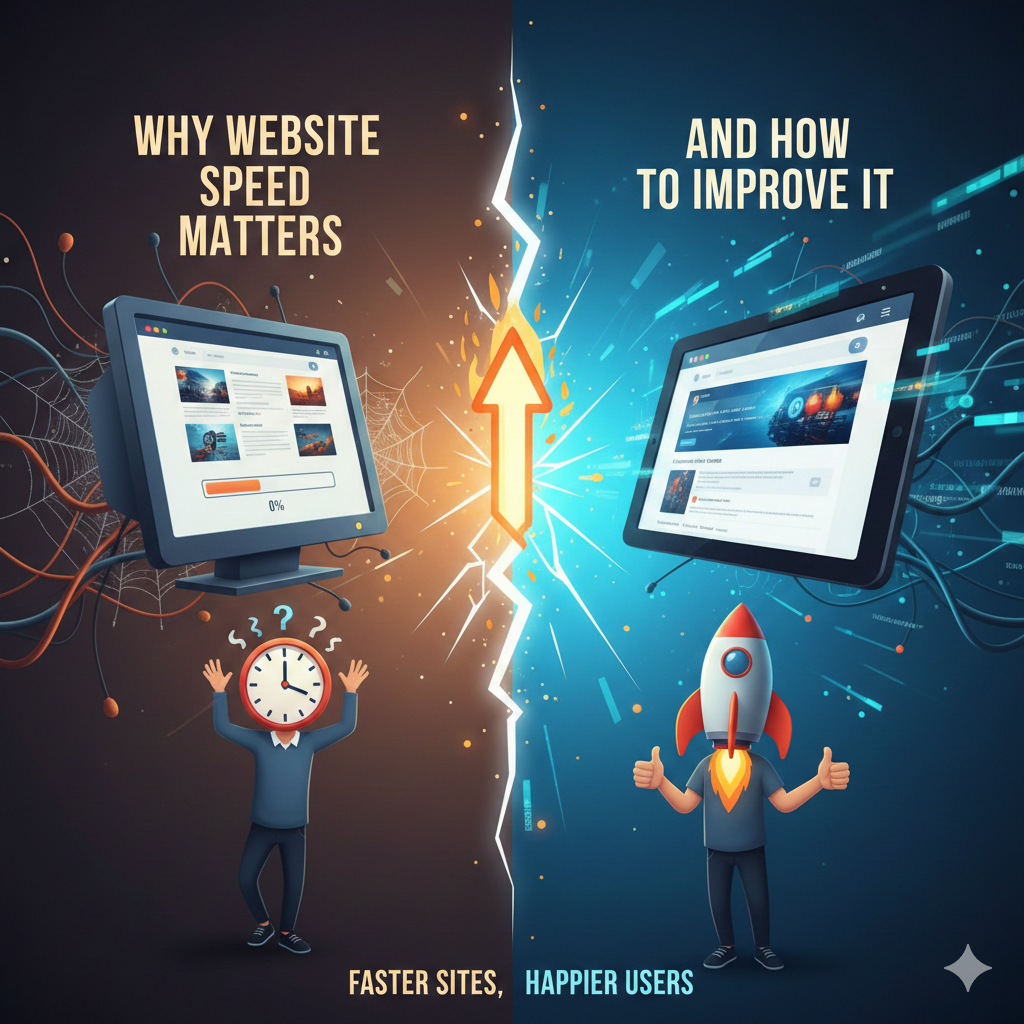
In today’s digital world, attention spans are shorter than ever. Users expect instant results, smooth browsing, and fast-loading pages. If a website takes too long to load, visitors leave — often without coming back. That’s why Speed Matters more today than at any other time in web history. It is not just a technical metric; it directly dictates user experience, SEO rankings, and conversion rates.
Whether you run a business website, blog, e-commerce store, or portfolio, performance is now a core success factor. Let’s explore why Speed Matters so much and how you can significantly improve your website performance.
Table of Contents
The Direct Impact on User Experience
When visitors land on your website, their first impression forms within seconds. A slow page feels broken or unreliable. Users don’t usually wait — they close the tab and move on to a competitor. This behavior clearly shows why Speed Matters for user experience.
Fast websites feel smooth and professional. Pages load instantly, images appear quickly, and interactions feel responsive. This creates trust and encourages users to explore more pages. A faster experience also reduces frustration, especially for mobile users who may be on slower networks.
Key user experience benefits of faster sites include:
-
Lower bounce rates
-
Longer session duration
-
Higher engagement
-
Better brand perception
When users enjoy browsing, they are more likely to return — another reason Speed Matters for long-term audience growth.
Website Speed and SEO Rankings
Search engines now treat performance as a ranking factor. Page speed influences how websites appear in search results. If two sites have similar content quality, the faster one often ranks higher. This is another major reason Speed Matters for visibility.
Search engines measure real user performance signals such as:
-
Page load time
-
Interactivity delay
-
Visual stability
-
Mobile performance
Slow websites are harder for search bots to crawl efficiently. That can reduce index coverage and ranking potential. Faster sites get crawled more effectively and deliver better technical signals.
Performance optimization is no longer optional SEO work — it is foundational. If you want organic traffic, Speed Matters at every technical layer of your site.
Conversion Rates Depend on Speed
Speed is directly tied to revenue and lead generation. Even small delays can significantly reduce conversions. Studies across industries show that each extra second of load time can drop conversion rates noticeably. That’s why Speed Matters for sales and business growth.
Consider these scenarios:
-
An e-commerce shopper abandons a slow checkout page
-
A potential client leaves before a contact form loads
-
A reader exits before seeing your call-to-action
Fast websites remove friction. They keep users moving smoothly from interest to action. When the path is quick and seamless, more visitors convert into customers or subscribers. From a business perspective, Speed Matters because it protects your marketing investment.
Mobile Users Make Speed Even More Critical
Most web traffic now comes from mobile devices. Mobile networks can be unstable, slower, and data-limited. Heavy pages perform poorly under these conditions. That is exactly why Speed Matters even more for mobile optimization.
Mobile users often:
-
Browse on the go
-
Use slower connections
-
Have limited patience
-
Expect instant responses
A lightweight, optimized site performs better across devices and network conditions. Mobile-first performance design is now a standard best practice — because Speed Matters where most users actually are.
How to Improve Website Speed — Practical Steps
Understanding importance is only half the work. Let’s look at practical methods to improve performance.
Optimize Images
Images are often the largest files on a webpage. Uncompressed images slow everything down.
Do this:
-
Compress images before uploading
-
Use modern formats like WebP when possible
-
Resize images to actual display size
-
Avoid uploading massive originals
Image optimization alone can dramatically improve load time because Speed Matters most on media-heavy pages.
Use Caching
Caching stores ready-to-serve versions of your pages so they don’t need to be generated every visit.
Benefits include:
-
Faster repeat visits
-
Reduced server load
-
Lower response time
Enable browser caching and server caching through plugins or hosting tools. This is one of the highest-impact improvements when Speed Matters for returning users.
Minify CSS and JavaScript
Code files often contain extra spaces, comments, and unused sections. Minifying removes unnecessary characters and reduces file size.
Actions:
-
Minify CSS and JS
-
Combine files where practical
-
Remove unused scripts
-
Delay non-critical JavaScript
Cleaner code loads faster and executes sooner — reinforcing why Speed Matters at the code level.
Choose Better Hosting
Your hosting provider directly affects server response time. Cheap or overloaded servers slow everything down.
Look for:
-
Fast server response times
-
Solid uptime guarantees
-
Built-in caching support
-
Nearby server locations
Upgrading hosting often produces immediate gains. Infrastructure choices prove again that Speed Matters beyond just front-end design.
Use a Content Delivery Network (CDN)
A CDN stores copies of your site across global servers and delivers content from the nearest location to the visitor.
This reduces:
-
Geographic delay
-
Latency
-
Load time for global audiences
If your visitors are spread across regions, a CDN can provide a major boost because Speed Matters worldwide, not just locally.
Reduce Plugins and External Requests
Too many plugins or third-party scripts add extra load time. Each external request creates delay.
Best practices:
-
Remove unused plugins
-
Replace heavy plugins with lightweight ones
-
Limit third-party trackers
-
Audit script usage regularly
Less overhead means faster pages — reinforcing that Speed Matters in every added feature.
Final Thoughts
Website performance is no longer a secondary technical detail. It is central to success online. From user satisfaction to search rankings to revenue, performance influences every major outcome. The evidence is clear: Speed Matters across user experience, SEO, and conversions.
By optimizing images, enabling caching, cleaning code, improving hosting, and reducing unnecessary load, you can achieve measurable gains. Even small improvements create meaningful results.

Chinnu Sunny
Chinnu Sunny is an Wordpress Web Designer at Upgraderz