
The Rise of No-Code & Low-Code Platforms: Empowering Innovation in 2025

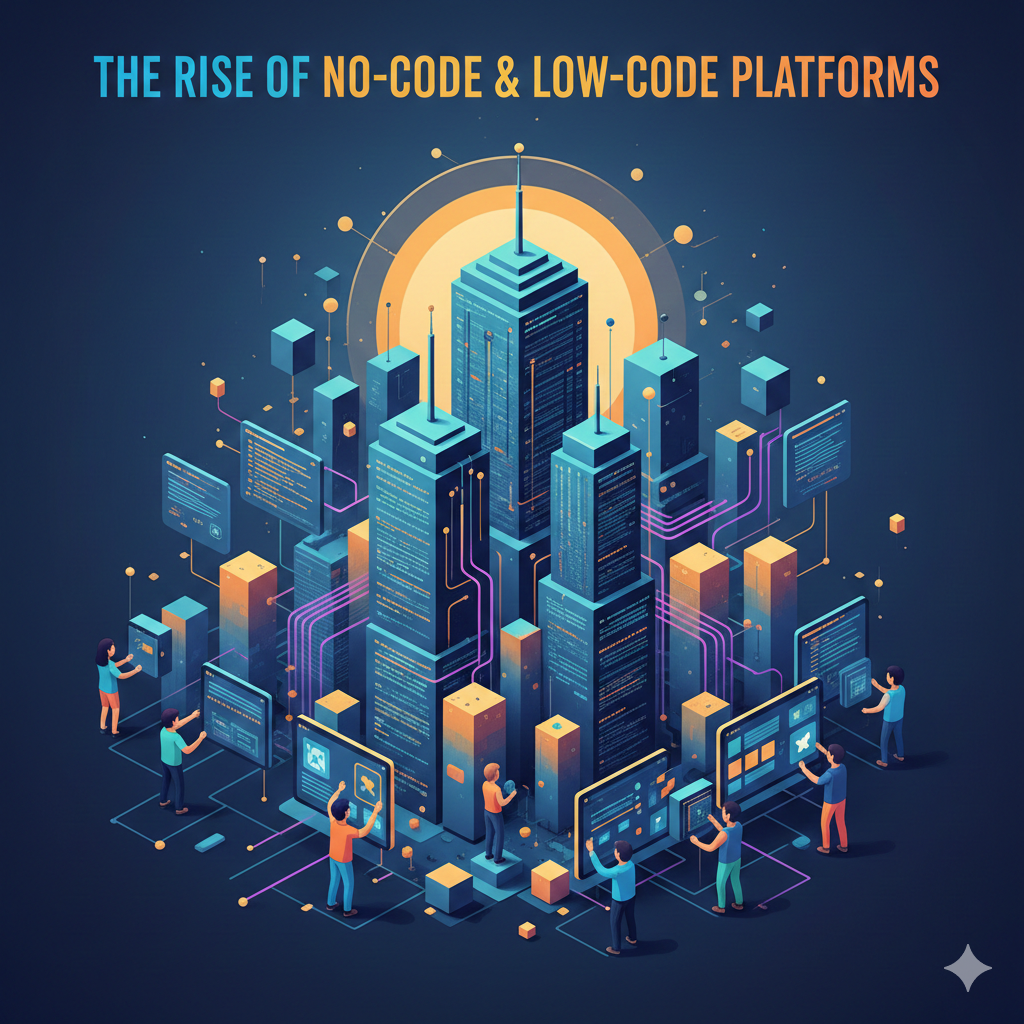
the digital landscape is evolving faster than ever before. Businesses are under pressure to launch websites, apps, and automation systems quickly while keeping costs under control. Traditional software development, although powerful, often requires significant time, technical expertise, and financial investment. This shift has led to the rapid growth of No-Code & Low-Code platforms, which are transforming how digital products are built and deployed.
These development methodologies are no longer experimental tools for startups. They have become mainstream solutions adopted by enterprises, entrepreneurs, marketers, educators, and even government organizations. The rise of No-Code & Low-Code platforms marks a major turning point in the democratization of technology.
Table of Contents
What Are No-Code & Low-Code Platforms?
Before exploring their impact, it is important to understand what these platforms actually are. No-Code & Low-Code platforms are development environments that allow users to create applications using visual interfaces, drag-and-drop components, and pre-built templates instead of writing complex programming code.
No-code platforms require zero coding knowledge. Users can design websites, mobile apps, workflows, and databases using visual tools. Low-code platforms, on the other hand, allow some level of coding customization for developers who want more flexibility while still reducing manual coding efforts.
Together, these technologies simplify development and make it accessible to a much broader audience.
Why Is a Breakthrough Year
The year represents a milestone for No-Code & Low-Code adoption. Several factors have contributed to this growth:
According to recent industry research by Gartner, low-code application development is expected to account for a significant portion of new enterprise applications in the coming years, further confirming the mainstream adoption of these development methodologies
Increased Demand for Digital Transformation
Businesses of all sizes are moving online. From e-commerce platforms to internal workflow systems, organizations need faster solutions. Traditional development cycles can take months, but modern visual builders reduce project timelines dramatically.
Shortage of Skilled Developers
The global demand for developers continues to exceed supply. Companies struggle to hire experienced programmers. This gap has accelerated the adoption of No-Code & Low-Code platforms as a practical solution to build applications without depending entirely on technical teams.
Cost Efficiency
Custom software development can be expensive. Hiring developers, maintaining infrastructure, and managing updates require ongoing investment. These platforms reduce costs by providing ready-made components and automated hosting environments.
Faster Prototyping and Innovation
Entrepreneurs and startups can now test ideas quickly. Instead of spending months building a minimum viable product (MVP), they can launch within weeks using No-Code & Low-Code tools and gather real-time feedback.
Empowering Non-Technical Creators
One of the biggest advantages of No-Code & Low-Code platforms is empowerment. In the past, creating digital tools required deep programming knowledge. Today, business owners, marketers, designers, and project managers can build their own solutions.
For example:
-
A small business owner can create an online store.
-
A marketing team can automate email campaigns and CRM workflows.
-
An educator can build a learning management system.
-
A startup founder can design a mobile app prototype.
This accessibility removes traditional barriers and encourages innovation at every level.
Impact on Businesses
The rise of No-Code & Low-Code platforms is changing how organizations operate internally and externally.
Improved Productivity
Teams can automate repetitive tasks such as data entry, approvals, and reporting. This saves time and allows employees to focus on strategic work.
Enhanced Collaboration
Because development becomes more visual and user-friendly, non-technical stakeholders can participate in the process. This reduces communication gaps between business teams and IT departments.
Faster Market Entry
Companies can respond quickly to market trends. Whether launching a new product page or building an internal dashboard, speed becomes a competitive advantage.
Are Developers at Risk?
A common concern is whether No-Code & Low-Code platforms will replace professional developers. The reality is more balanced.
While these tools handle simple and mid-level applications, complex enterprise systems, advanced integrations, cybersecurity, and scalable architectures still require experienced developers. Rather than replacing programmers, these platforms change their role.
Developers now focus on:
-
Custom integrations
-
Advanced backend systems
-
Performance optimization
-
Security management
-
Complex logic implementation
In fact, many developers use No-Code & Low-Code tools to speed up repetitive tasks and focus on high-value coding challenges.
Integration with AI and Automation
Another major driver in 2025 is the integration of artificial intelligence into No-Code & Low-Code platforms. AI features now assist users by:
-
Automatically generating layouts
-
Suggesting workflows
-
Creating content drafts
-
Optimizing user experience
-
Detecting errors
This combination of AI and visual development tools further reduces technical complexity and enhances efficiency.
Challenges and Limitations
Despite their advantages, these platforms are not perfect.
Limited Customization
Some highly specialized applications may require deeper customization than what visual tools allow.
Platform Dependency
Users depend on the provider’s infrastructure. If pricing changes or services are discontinued, businesses may face challenges.
Scalability Concerns
Although modern platforms are improving rapidly, large-scale enterprise systems sometimes require more robust backend frameworks.
Understanding these limitations helps organizations make informed decisions when adopting No-Code & Low-Code solutions.
The Future Outlook
Looking ahead, the growth of No-Code & Low-Code platforms will continue as digital transformation accelerates globally. More educational institutions are introducing visual development tools into their curriculum. Businesses are training employees to become “citizen developers.” Startups are launching faster than ever.
In the coming years, we can expect:
-
More AI-powered automation
-
Stronger security frameworks
-
Better integration capabilities
-
Enterprise-grade scalability
-
Hybrid models combining traditional and visual development
The technology landscape is becoming more inclusive, allowing innovation to emerge from anyone with an idea—not just professional programmers.
The rise of No-Code & Low-Code platforms in 2025 represents more than just a trend. It reflects a shift toward democratized technology, faster innovation, and accessible digital creation. By reducing technical barriers, these platforms empower individuals and businesses to transform ideas into reality without extensive coding knowledge.
While traditional development remains essential for complex systems, visual development tools are reshaping the industry and expanding opportunities. As adoption grows, organizations that embrace this shift will gain a competitive advantage in speed, efficiency, and innovation.
The future of software development is not about replacing developers—it is about enabling everyone to participate in building the digital world.

Chinnu Sunny
Chinnu Sunny is an Wordpress Web Designer at Upgraderz