
Career Insurance: How Continuous Upskilling Protects You from Layoffs in 2026

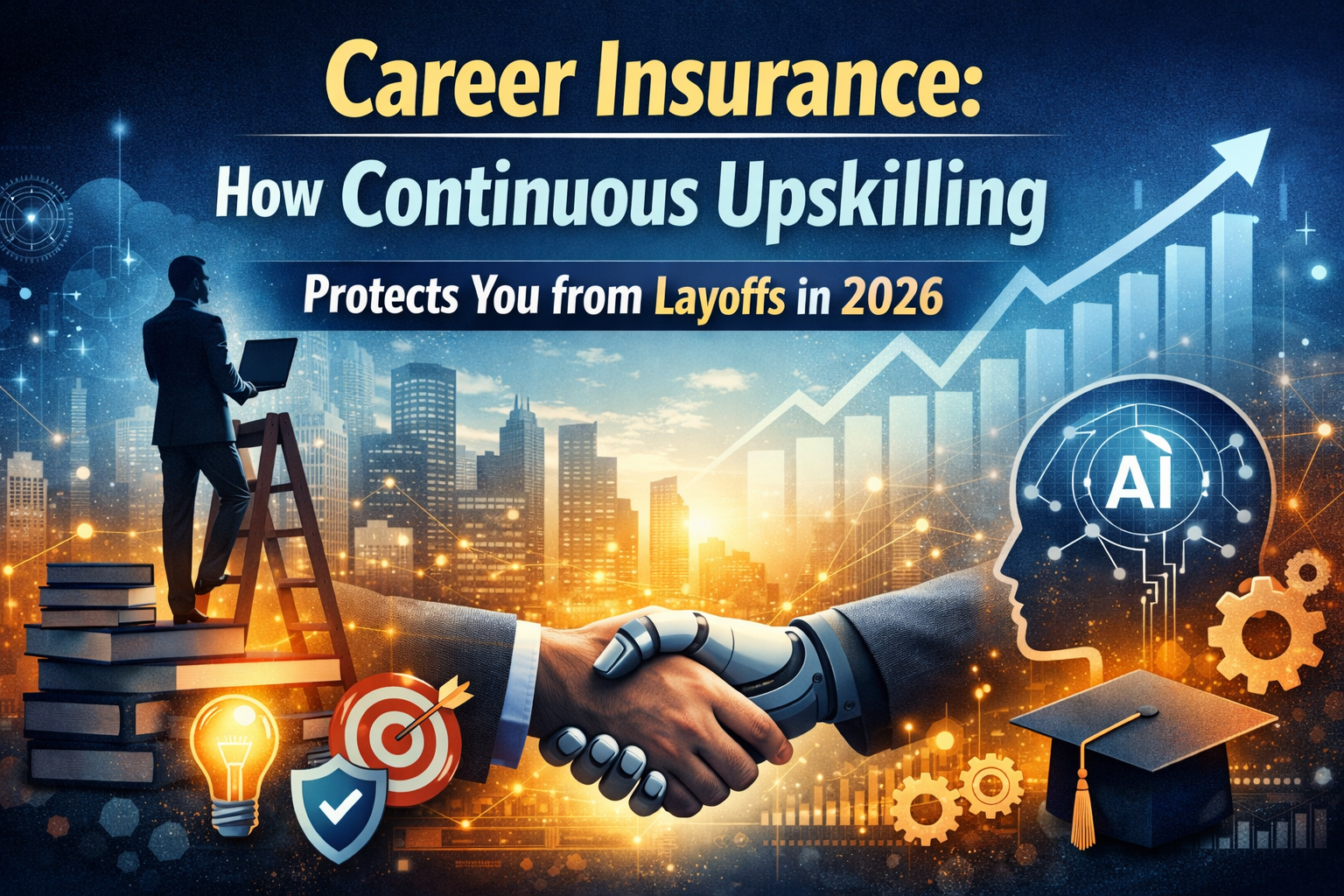
In 2026, job security looks very different from what it was a decade ago. Automation, artificial intelligence, economic shifts, and global competition have changed how companies hire, fire, and retain talent. Layoffs are no longer limited to struggling companies — even profitable businesses are restructuring teams to stay lean and tech-driven.
So how do professionals protect themselves in this uncertain job market?
The answer is simple: Upskilling.
Think of it as career insurance. Just like health or life insurance protects you from unexpected risks, continuously upgrading your skills protects your income, relevance, and employability.
Table of Contents
Why Layoffs Are Increasing in 2026
Companies are under constant pressure to improve efficiency. Tools powered by artificial intelligence can now handle tasks in marketing, finance, HR, customer service, and even legal documentation. Organizations are reducing roles that involve repetitive or easily automated work.
According to insights shared by the World Economic Forum, millions of jobs will be transformed by automation over the next few years. However, new roles are also being created — especially in digital strategy, AI management, data analysis, cybersecurity, and human-centered services.
The difference between losing a job and landing a better one often comes down to Upskilling.
What Is Career Insurance?
Career insurance is not a policy you buy from a company. It’s a mindset. It means proactively preparing for change instead of reacting to it.
Continuous Upskilling ensures you:
-
Stay relevant in your industry
-
Increase your internal value within your company
-
Remain attractive to recruiters
-
Adapt quickly to technological shifts
-
Earn higher salary opportunities
Professionals who treat learning as a lifelong process rarely stay unemployed for long.
How Continuous Learning Builds Layoff Protection
You Become Harder to Replace
Employees who combine technical expertise with problem-solving and strategic thinking are valuable assets. If your role evolves along with technology instead of competing against it, companies see you as an investment rather than a cost.
For example, instead of fearing AI tools, marketers who learn to use analytics dashboards and automation platforms become growth drivers.
That transformation only happens through consistent Upskilling.
You Open Multiple Career Paths
Relying on a single skill set is risky in 2026. But when you build complementary skills, you create career flexibility.
A graphic designer who learns UI/UX principles can transition into product design.
A content writer who learns SEO analytics can move into digital strategy.
A finance executive who studies data visualization tools can pivot into business intelligence.
Platforms like Coursera and edX offer certifications from global universities that help professionals build job-ready skills without leaving their current roles.
This type of Upskilling reduces dependency on one employer or one job description.
You Increase Your Internal Promotion Chances
When companies restructure, they often retain employees who can take on expanded responsibilities. Leaders look for adaptable team members who can manage new tools, workflows, or hybrid roles.
Professionals who invest in Upskilling are usually first in line for:
-
Cross-functional projects
-
Leadership roles
-
Digital transformation initiatives
-
Innovation teams
In uncertain times, versatility equals survival.
The 2026 Skills That Offer Real Protection
To make your career insurance strong, focus on skills that are difficult to automate.
The LinkedIn Skills Report consistently highlights demand in areas such as:
-
AI collaboration and prompt engineering
-
Data literacy
-
Cybersecurity awareness
-
Emotional intelligence
-
Strategic communication
-
Project management
-
Digital marketing analytics
Technical skills get you interviews. Human skills help you stay employed.
Strategic Upskilling means balancing both.
The Financial Impact of Continuous Upskilling
Let’s talk about income.
Professionals who consistently update their expertise often see:
-
Faster salary growth
-
Better job offers
-
Stronger negotiation power
-
Consulting or freelance opportunities
Research from McKinsey & Company shows that adaptable workers recover faster after economic downturns. Their employment gaps are shorter, and their re-entry salaries are often higher.
Instead of waiting for layoffs to happen, smart professionals treat Upskilling as a regular monthly investment — just like saving money.
How to Build a Personal Upskilling Strategy
You don’t need to learn everything. You need to learn strategically.
Here’s a simple framework:
Step 1: Audit Your Current Skills
List your technical, digital, and soft skills. Identify which ones are becoming outdated.
Step 2: Study Industry Trends
Follow trusted sources such as Harvard Business Review for insights into leadership, AI transformation, and future workplace trends.
Step 3: Choose One Skill Per Quarter
Avoid overwhelm. Focus on one meaningful skill upgrade every 3–4 months.
Step 4: Apply What You Learn
Practice inside your current job. Volunteer for tasks that allow you to use your new capability.
Consistent Upskilling compounds over time. After one year, you may have four new valuable competencies. After three years, you could be in a completely higher career bracket.
The Psychological Advantage
Layoffs don’t just affect income — they affect confidence.
Professionals who continuously invest in Upskilling feel more secure because they know their abilities are transferable. Instead of fearing job market changes, they view them as opportunities.
Confidence is powerful. Employers sense it during interviews. Managers recognize it during reviews.
And confidence comes from preparation.
Make 2026 Your Strongest Career Year
Layoffs may increase. Automation may accelerate. Industries may transform.
But skilled professionals will always be needed.
The job market of 2026 rewards learners, not position-holders. Titles may disappear. Skill sets will not.
Treat Upskilling as your career insurance policy. Start small, stay consistent, and focus on future-relevant abilities. The more adaptable you become, the less vulnerable you are.

Chinnu Sunny
Chinnu Sunny is an Wordpress Web Designer at Upgraderz