
SEO in 2026: What’s Changing and What Still Works

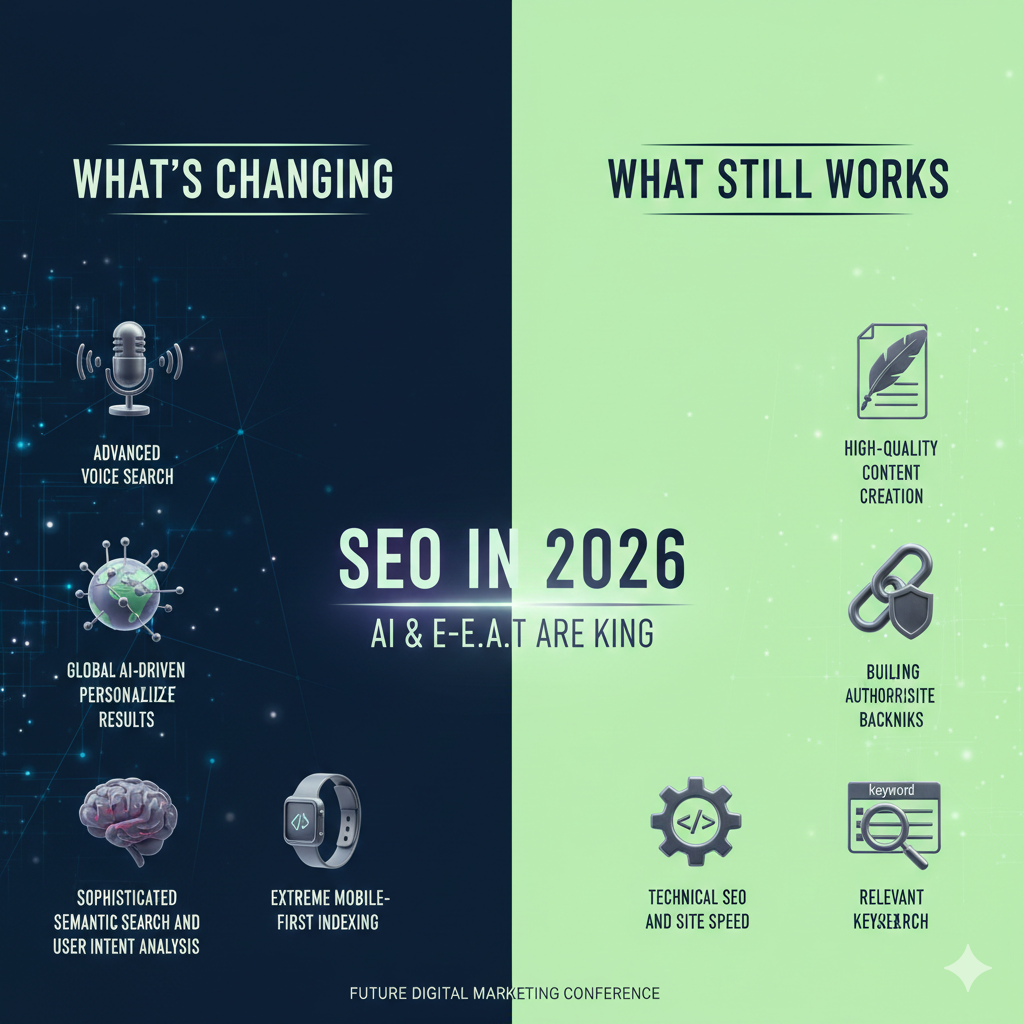
Search engine optimization has evolved far beyond keyword stuffing and backlink counts. SEO in 2026 is centered on user intent, credibility, experience, and content usefulness. Search engines now evaluate not just what you publish, but how well your content satisfies real human needs. With AI-driven search, conversational queries, and behavior-based ranking signals, marketers must think of SEO as a connected system rather than a checklist.
SEO is no longer about chasing algorithms. It is about understanding how people search, how engines judge trust, and how digital experiences support real intent. Businesses that succeed treat SEO as a blend of content strategy, technical performance, and authority building.
Let’s explore what is changing in SEO in 2026 and what continues to work reliably.
Table of Contents
What’s Changing in SEO in 2026
AI-Driven Search Results Are the New Normal
Search engines now use advanced AI models to interpret context, intent, and meaning instead of matching exact keywords. Results are often summarized, compared, and explained directly on the results page. This means content must be structured, clear, and information-rich to be selected as a trusted source.
Pages that answer questions directly, provide structured explanations, and include supporting details are more likely to be surfaced in AI summaries. Thin content and vague articles rarely appear in top positions anymore.
What to do: Write complete answers, not partial ones. Use structured headings, FAQs, and well-organized sections.
Search Intent Matters More Than Keywords
Keyword targeting still exists, but intent mapping is now more important. Search engines classify queries into informational, transactional, navigational, and comparative intent categories. Pages that match the correct intent rank higher.
For example, a user searching for “best budget laptops” expects comparisons and recommendations — not a general article about computer history.
What to do: Before writing, identify the real purpose behind the query and build content around that purpose.
User Experience Is a Ranking Factor Everywhere
Speed, layout stability, mobile usability, and interaction quality now strongly influence ranking. Search engines measure how users behave after clicking your page — whether they stay, scroll, interact, or return to results.
A slow site with intrusive popups and poor readability will lose ranking even if the content is good.
What to do: Improve page speed, mobile design, readability, and layout clarity. Reduce distractions and improve navigation.
Authority and Trust Signals Are Stronger
Credibility signals have become central to SEO in 2026. Search engines evaluate:
-
Author expertise
-
Content accuracy
-
Topical consistency
-
Source references
-
Brand reputation
-
User engagement signals
Sites that regularly publish reliable, well-researched content in a focused niche perform better than general-topic sites.
What to do: Build topic clusters and publish consistently within your expertise area.
Voice and Conversational Queries Are Growing
More searches are now conversational and question-based. Users ask full questions instead of typing short phrases. This changes how content should be written.
What to do: Include natural language questions and answers. Add FAQ sections and conversational subheadings.
What Still Works in SEO in 2026
Despite all the changes, several core SEO principles remain powerful and effective.
High-Quality Content Still Wins
No algorithm update has replaced the need for helpful, original, and well-structured content. Pages that genuinely solve problems and explain topics clearly continue to rank.
Strong content includes:
-
Clear explanations
-
Useful examples
-
Updated information
-
Logical structure
-
Actionable guidance
Word count alone does not matter — usefulness does.
Still works: Write for humans first, optimization second.
On-Page SEO Fundamentals Still Matter
Basic optimization techniques are still required:
-
Clear page titles
-
Descriptive meta descriptions
-
Proper heading structure
-
Internal linking
-
Clean URLs
-
Image alt text
These help search engines understand your page structure and topic.
Still works: Good on-page structure improves discoverability and indexing.
Topic Clusters and Internal Linking
Search engines reward topical depth. Instead of isolated blog posts, interconnected topic clusters perform better. A pillar page supported by related subtopics builds authority and context.
Internal linking helps search engines understand relationships between pages and distributes ranking strength.
Still works: Build content ecosystems, not random posts.
Backlinks Still Have Value — But Quality Only
Backlinks are still a ranking signal, but quality matters far more than quantity. Links from relevant, trusted sites carry weight. Spammy or irrelevant links are often ignored or penalized.
Natural mentions, citations, and references from credible sources are now more important than directory or bulk links.
Still works: Earn links through value, not schemes.
Technical SEO Is Still Foundational
Technical health remains essential:
-
Fast loading times
-
Secure connections
-
Crawlable structure
-
Proper indexing
-
Structured data markup
Without technical stability, even great content struggles to rank.
Still works: A technically clean website is the base layer of SEO success.
How Marketers Should Think About SEO in 2026
SEO is now a system that connects three pillars:
Content
Answer real questions, cover topics deeply, and maintain accuracy.
Experience
Deliver fast, clean, mobile-friendly, easy-to-read pages.
Trust
Show expertise, consistency, and credibility.
When these three work together, rankings follow naturally.
Practical Action Plan for SEO in 2026
To stay competitive:
-
Focus on intent-based content creation
-
Build topic clusters instead of isolated posts
-
Improve page speed and UX
-
Add structured FAQs
-
Use clear headings and summaries
-
Publish expert-level guides
-
Update old content regularly
-
Strengthen internal linking
-
Earn credible backlinks
-
Measure engagement, not just traffic

Chinnu Sunny
Chinnu Sunny is an Wordpress Web Designer at Upgraderz