
Hyper Personalized Ads: What Brands Must Do in 2026

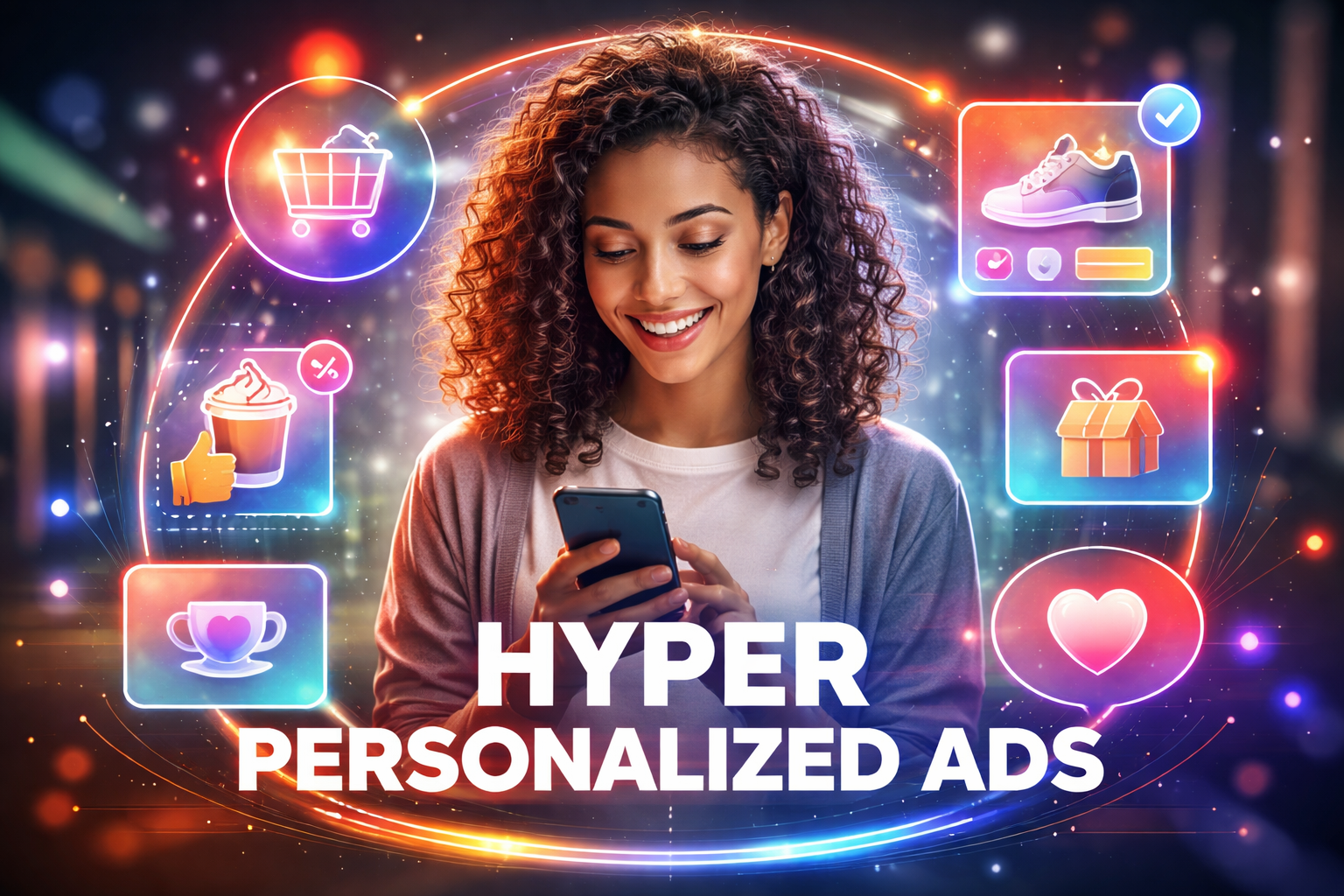
In 2026, digital advertising is no longer about reaching large audiences it’s about reaching the right individual at the right moment with the right message. Hyper personalized ads are becoming the new standard as consumers expect brands to understand their preferences, behaviors, and intent. Traditional segmentation based on age, gender, or location is no longer enough. Instead, personalized ads powered by AI, real-time data, and privacy-first strategies are shaping the future of marketing.
This blog explores what hyper personalization really means and what brands must do in 2026 to stay competitive.
Table of Contents
What Are Hyper Personalized Ads?
Hyper personalized ads go beyond basic personalization like using a customer’s name or recommending similar products. They combine multiple data points—browsing behavior, purchase history, device usage, location, time, and intent—to deliver highly relevant ad experiences in real time.
For example, instead of showing the same shoe ad to all users, a hyper personalized ad may show:
- A discount to a returning customer
- A product review-based ad to a comparison shopper
- A reminder ad for an abandoned cart user
This level of personalization creates ads that feel helpful rather than intrusive.
Why Personalized Ads Matter More in 2026
Consumer behavior is evolving rapidly. Attention spans are shorter, competition is higher, and ad fatigue is real. In 2026, users expect brands to respect their time and preferences.
Key reasons personalized ads are critical:
- Higher engagement and click-through rates
- Improved conversion and ROI
- Better customer experience
- Stronger brand loyalty
Brands that fail to personalize risk being ignored—or worse, blocked.
Use AI and Predictive Analytics Smartly
Artificial intelligence is the backbone of hyper personalized ads. In 2026, brands must move from reactive advertising to predictive advertising.
AI helps brands:
- Analyze user behavior patterns
- Predict future intent
- Deliver ads before customers actively search
For example, AI can identify when a customer is likely to repurchase and trigger a timely ad with a personalized offer. Brands should invest in AI tools that integrate CRM, ad platforms, and analytics to create unified customer profiles.
Shift to First-Party Data Collection
With third-party cookies disappearing, brands must rely on first-party data to power personalized ads.
Effective first-party data sources include:
- Website interactions
- Email subscriptions
- App usage
- Purchase history
- Customer surveys
Brands must encourage users to share data voluntarily by offering value—such as exclusive content, discounts, or personalized recommendations. Transparency about data usage builds trust and improves opt-in rates.
Prioritize Privacy and Consent
In 2026, privacy is not optional—it’s a brand responsibility. Regulations and consumer awareness demand ethical data usage.
What brands must do:
- Clearly explain how data is collected and used
- Offer easy consent and opt-out options
- Use privacy-first personalization models
Personalized ads should feel respectful, not invasive. When users trust a brand, they are more willing to share data, leading to better personalization outcomes.
Deliver Omnichannel Personalized Experiences
Hyper personalization must be consistent across all platforms. Users interact with brands on websites, social media, search engines, apps, and email.
In 2026, successful brands will:
- Sync customer data across channels
- Maintain consistent messaging and offers
- Personalize ads based on the user’s stage in the journey
For example, a user who viewed a product on a website may later see a personalized ad on social media and receive a follow-up email—all aligned in tone and message.
Use Real-Time Contextual Targeting
Context matters as much as content. Personalized ads in 2026 will adapt based on real-time factors such as:
- Location
- Device type
- Time of day
- Weather
- Current activity
A food delivery brand, for example, may promote comfort meals during rainy evenings or quick lunches during office hours. Real-time personalization makes ads feel timely and relevant.
Focus on Creative Personalization, Not Just Data
Data alone is not enough. Creative elements must also be personalized.
Brands should customize:
- Ad copy
- Visuals
- CTAs
- Offers
Dynamic creative optimization (DCO) allows multiple versions of ads to be generated automatically based on user data. In 2026, brands that combine strong storytelling with personalization will stand out.
Measure the Right Metrics
Traditional metrics like impressions are no longer sufficient. Brands must track metrics that reflect user engagement and experience.
Key metrics for personalized ads:
- Engagement rate
- Conversion rate
- Customer lifetime value
- Retention rate
- Return on ad spend (ROAS)
Continuous testing and optimization are essential to refine personalization strategies.
In 2026, hyper personalized ads are not a trend—they are a necessity. Consumers expect relevance, value, and respect for privacy. Brands that successfully implement personalized ads using AI, first-party data, ethical practices, and creative excellence will gain a significant competitive advantage.
The future of advertising belongs to brands that listen, understand, and connect with customers on an individual level. Those who adapt now will not only increase conversions but also build lasting relationships in an increasingly digital world.

Chinnu Sunny
Chinnu Sunny is an Wordpress Web Designer at Upgraderz