
How to Update Old Blog Posts That No Longer Get Traffic

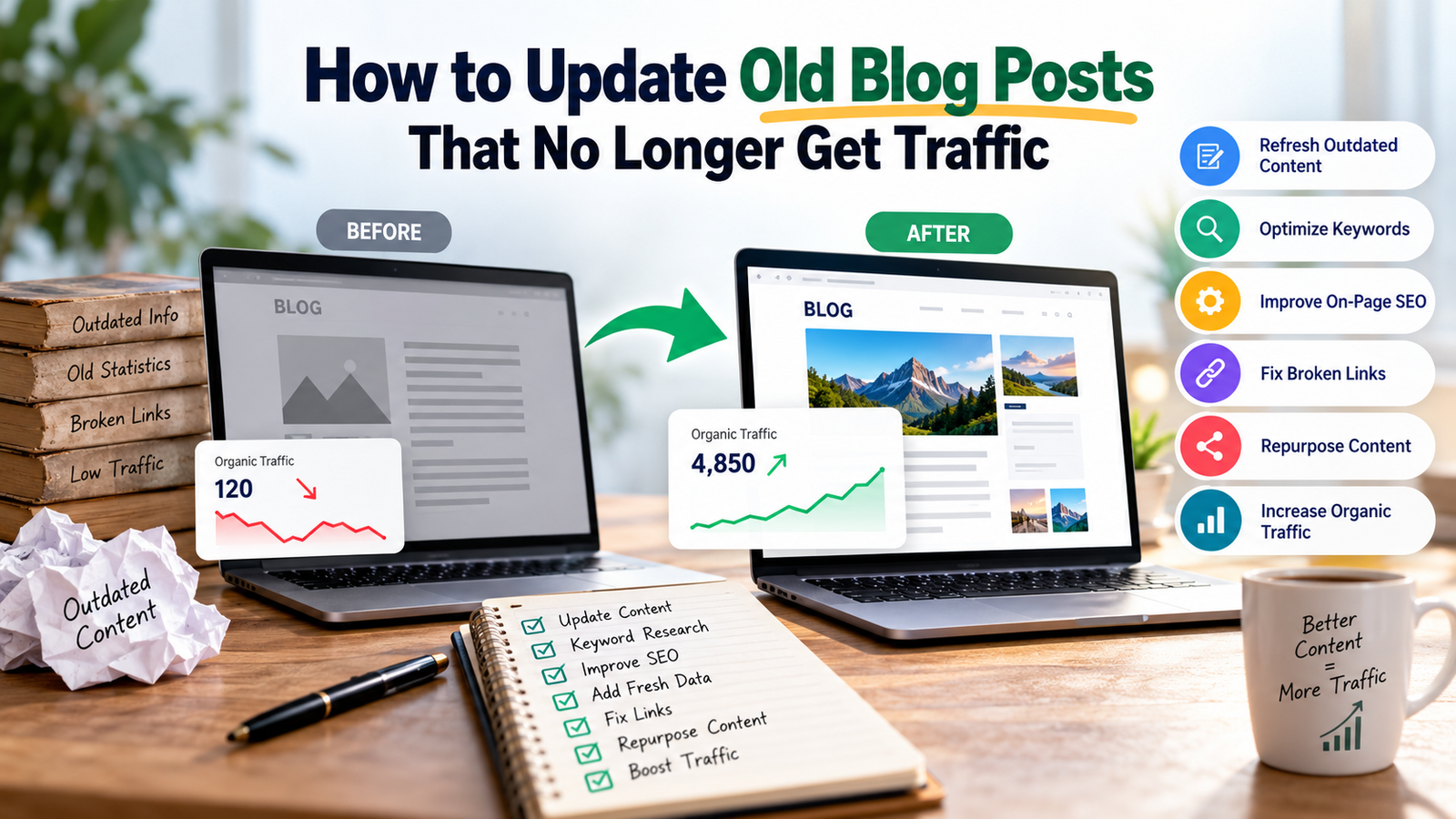
Publishing a blog post is only the beginning of a successful content marketing strategy. Over time, even well-written articles can lose visibility, experience declining search rankings, and attract fewer visitors.
Outdated information, changing search intent, increased competition, and technical SEO issues can all affect organic traffic.
Instead of constantly publishing new articles, businesses can improve their existing content. Understanding how to update old blog posts helps website owners recover lost visibility, improve content quality, and create more opportunities for organic growth.
Let’s explore practical strategies for bringing underperforming blog content back to life.
Table of Contents
Why Do Old Blog Posts Lose Traffic
Before learning how to update old blog posts, it is important to understand why their performance declines.
Several factors can affect previously successful content:
-
- Outdated information: Old statistics, examples, and recommendations may no longer be relevant.
- Changing search intent: Users may now expect different information from the same search query.
- Increasing competition: Competitors may publish more comprehensive and useful articles.
- Keyword ranking changes: Search engines continuously reassess content relevance.
- Technical SEO problems: Broken links, indexing errors, and slow-loading pages can affect performance.
Identifying the actual cause helps businesses choose the right content improvement strategy.
Identify Underperforming Blog Posts
The first step in how to update old blog posts is identifying articles that have lost organic traffic.
Use Google Search Console and Google Analytics to evaluate website performance.
Important metrics include:
-
- Organic search clicks and impressions
- Average keyword positions
- Click-through rate (CTR)
- Organic landing-page sessions
- Engagement and conversions
Compare recent performance with previous periods to identify significant declines.
For example, an article that previously attracted 1,000 monthly organic visits but now receives only 150 deserves further investigation.
Prioritize articles that previously performed well, target relevant keywords, and still offer value to your audience.
Refresh Outdated Content With Relevant Information
One of the most effective ways to update old blog posts in SEO is by improving outdated information.
Review each article carefully and identify sections requiring changes.
Consider updating:
-
- Outdated statistics and industry information
- Old examples and case studies
- Broken or irrelevant references
- Product and service descriptions
- Missing explanations and frequently asked questions
Adding original insights, practical examples, and current information makes the content more useful.
According to Google’s helpful content guidelines, content should prioritize genuine value, reliability, and user satisfaction.
Avoid changing publication dates without making meaningful improvements.
Conduct Fresh Keyword Research
Keyword optimization is essential when learning how to update old blog posts effectively.
Search behavior changes, and keywords that previously generated traffic may no longer match user expectations.
Use keyword research tools such as Google Keyword Planner, Ahrefs, or Semrush to discover relevant opportunities.
Focus on:
-
- Primary keywords matching search intent
- Relevant secondary keywords
- Long-tail search queries
- Question-based keywords
- Related topics missing from the article
For example, an outdated article targeting “blog SEO tips” might benefit from additional sections addressing content audits, search intent, and organic traffic recovery.
Place relevant keywords naturally in headings, paragraphs, title tags, and image descriptions.
Avoid keyword stuffing because readability and usefulness matter more than repetition.
Improve On-Page SEO Elements
A major part of how to update old blog posts involves improving on-page SEO.
Even valuable articles can underperform when their titles, descriptions, and structure fail to communicate relevance.
Review these elements:
SEO Title: Create a descriptive, engaging title that accurately represents the article.
Meta Description: Summarize the content clearly and encourage relevant users to click.
Headings: Organize information using logical H1, H2, and H3 headings.
Image Alt Text: Add meaningful descriptions to relevant images.
Internal Links: Connect related pages to improve navigation and content discovery.
URL Structure: Keep URLs readable and descriptive. Avoid changing established URLs unnecessarily.
Businesses looking to strengthen their website’s organic performance can explore professional SEO services from Upgraderz Digital Solutions.
Improve Content Quality and User Experience
Understanding how to update old blog posts also means improving the overall reading experience.
Visitors should find answers quickly without struggling through complicated paragraphs or poorly organized information.
Improve content readability by:
-
- Writing shorter, meaningful paragraphs
- Using descriptive subheadings
- Adding relevant examples
- Including useful images or infographics
- Removing repetitive or unnecessary content
- Ensuring mobile-friendly formatting
Check website loading performance and fix technical problems affecting accessibility.
A well-structured article helps readers understand information and encourages meaningful engagement.
Fix Broken Links and Strengthen Internal Linking
Broken links can frustrate visitors and reduce the usefulness of older content.
During a content audit, examine internal and external links.
Replace broken references with relevant, reliable sources. Add internal links to related blog posts, service pages, and helpful resources.
For additional guidance, review the Google Search Central SEO Starter Guide.
Strong internal linking helps users discover related information and allows search engines to understand relationships between website pages.
Avoid adding unrelated links simply to increase their number.
Repurpose Old Blog Content for Better Reach
Learning how to update old blog posts should also include content repurposing.
A valuable article can become several useful marketing assets.
For example, transform an updated blog into:
-
- Instagram carousel posts
- Short educational reels
- LinkedIn articles
- Email newsletters
- Infographics
- Frequently asked questions
Repurposing old blog content helps businesses reach audiences through different channels while extending the value of existing resources.
Share the refreshed article through relevant platforms to encourage discovery.
Decide Whether to Update, Merge, Redirect, or Delete
Not every outdated blog deserves a complete rewrite.
Before making changes, evaluate its relevance, traffic history, backlinks, and business value.
Update: Refresh articles with useful information and realistic improvement opportunities.
Merge: Combine overlapping articles when a single comprehensive resource would better serve readers.
Redirect: Use a permanent redirect when an outdated page has a closely relevant replacement.
Delete: Remove content only when it provides little value and cannot reasonably be improved.
Avoid deleting articles simply because their traffic has declined. Valuable backlinks and relevant information may still justify keeping them.
Monitor SEO Performance After Updating
The final stage of how to update old blog posts is measuring the results.
After publishing meaningful improvements, monitor performance using Google Search Console and Google Analytics.
Track changes in:
-
- Organic traffic
- Keyword visibility
- Search impressions
- Click-through rates
- User engagement
- Leads and conversions
Compare results over several weeks and months rather than expecting immediate ranking improvements.
Continue refining content based on actual performance and changing audience needs.
Old blog posts do not automatically lose their value when organic traffic declines. With the right strategy, businesses can refresh outdated content, improve blog traffic, and strengthen their long-term SEO performance.
Knowing how to update old blog posts allows businesses to make better use of existing content investments instead of depending entirely on new publications.
Regular SEO content audits, keyword improvements, content optimization, and performance monitoring can help revive old blog posts and maintain a useful website.
Upgraderz Digital Solutions helps businesses improve their digital presence through strategic SEO, website optimization, and content marketing solutions.
Invest in better content today to create stronger opportunities for tomorrow.

Rinu Ann George
Rinu Ann George is an SEO Analyst at Upgraderz, specializing in search engine optimization, content strategy, and digital visibility.