
Digital Marketing for Small Businesses: Why They Fail in Their First Year
Discover why Digital Marketing for Small Businesses often fails in the first year and learn practical strategies to improve online visibility, attract customers, generate leads, and achieve sustainable business growth.

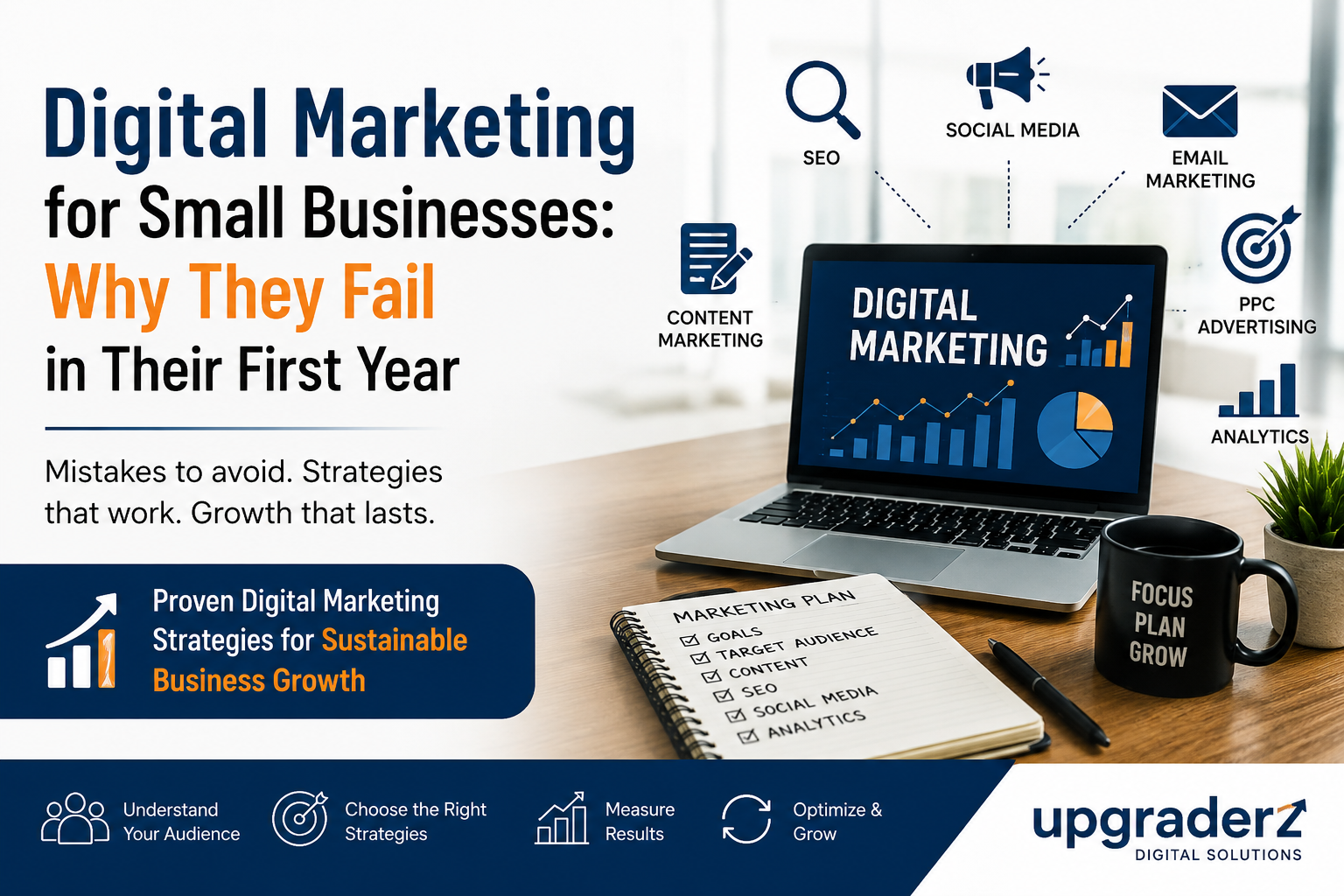
Starting a business is exciting, but attracting customers consistently is one of the biggest challenges for new companies. A strong product or service alone does not guarantee visibility, leads, or sales. Businesses need a well-planned online presence to reach the right audience at the right time.
Digital Marketing for Small Businesses involves using online channels such as search engines, social media, websites, email, content, and paid advertising to attract and convert potential customers. However, many small businesses struggle during their first year because they approach digital marketing without a clear strategy, measurable goals, or sufficient consistency.
Understanding the common mistakes can help business owners build a stronger foundation and achieve sustainable growth.
Table of Contents
What Is Digital Marketing for Small Businesses
Digital Marketing for Small Businesses is the process of promoting products, services, and brands through digital channels. It can include search engine optimization (SEO), social media marketing, content marketing, email marketing, PPC advertising, online reviews, local SEO, and other digital activities.
Unlike traditional advertising, digital marketing allows businesses to target specific audiences, measure campaign performance, and adjust strategies based on results. For a small business with limited resources, this flexibility can make online marketing for small businesses a practical way to compete with larger brands.
A successful strategy begins by understanding the target audience, defining business objectives, selecting the right channels, and measuring meaningful results.
Why Small Businesses Fail at Digital Marketing in Their First Year
No Clear Digital Marketing Strategy
One of the biggest problems in Digital Marketing for Small Businesses is starting campaigns without defining what success means. Some businesses post on social media, publish blogs, or run advertisements simply because competitors are doing the same.
Effective Digital Marketing for Small Businesses should begin with clear objectives such as increasing website traffic, generating qualified leads, improving local visibility, or increasing sales.
Trying to Use Every Marketing Channel
Small businesses often spread their limited time and budget across Facebook, Instagram, LinkedIn, Google Ads, email, blogs, and other channels simultaneously. With Digital Marketing for Small Businesses, trying to manage every channel at once can reduce efficiency and make it difficult to achieve meaningful results.
Instead, identify where the target audience spends time and focus on the platforms most likely to produce results. A focused strategy is generally easier to manage, measure, and improve.
Ignoring Small Business SEO
Search engines can provide valuable long-term visibility, but many new businesses overlook SEO because they expect immediate results.
Small business SEO involves optimizing website content, technical elements, local listings, internal links, and other signals so potential customers can discover the business through relevant searches. Google recommends creating helpful, reliable, people-first content and making it easy for search engines to crawl and understand websites.
SEO is not an overnight solution. Businesses need consistent optimization, useful content, and patience.
Creating Content Without Understanding the Audience
Content marketing is more than publishing random blog posts. Content should answer real customer questions, solve problems, demonstrate expertise, and support the buyer journey.
Successful digital marketing strategies for small business should include content that addresses awareness, consideration, and conversion. Researching search intent and customer pain points helps businesses create content that attracts qualified visitors.
Depending Only on Social Media
Social media marketing for small business can improve brand awareness, engagement, and customer relationships. However, relying entirely on social platforms creates a major weakness because businesses do not control the platforms or their algorithms.
A stronger approach combines social media with a website, SEO, email marketing, content marketing, and other channels. Hootsuite’s small-business social media guide
Spending on Ads Without Tracking Results
PPC advertising can generate traffic quickly, but Digital Marketing for Small Businesses campaigns can become expensive when they are launched without proper targeting, optimized landing pages, conversion tracking, or budget control.
Businesses should monitor metrics such as cost per lead, conversion rate, return on ad spend, and customer acquisition cost rather than focusing only on clicks or impressions.
Successful Digital Marketing Strategies for Small Business
A practical Digital Marketing for Small Businesses plan should combine several complementary strategies.
Build a Conversion-Focused Website
Your website is the foundation of your online presence. Make sure it loads quickly, works well on mobile devices, communicates your value clearly, and provides simple calls to action.
Invest in Local SEO
For businesses serving specific locations, local SEO can help potential customers discover services when searching nearby. Optimize your Google Business Profile, maintain consistent business information, collect genuine reviews, and create location-relevant website content.
Create Helpful Content
Blog articles, guides, FAQs, videos, and case studies can attract organic traffic while building trust. Content should be useful rather than created simply to insert keywords.
Use Social Media Strategically
Choose platforms based on your audience rather than trying to maintain every social profile. Create useful, engaging content and use analytics to understand which topics and formats perform best.
Build an Email Marketing List
Email marketing helps businesses maintain relationships with existing customers and nurture potential buyers. Newsletters, educational content, offers, and follow-up campaigns can support customer retention and repeat sales.
Measure and Improve Performance
Analytics should be part of every Digital Marketing for Small Businesses campaign. Track website traffic, leads, conversions, engagement, rankings, and revenue to identify what is working.
The U.S. Small Business Administration also emphasizes aligning digital marketing with business goals, available time, and budget while making effective use of tools such as Google listings, social media, websites, SEO, blogs, and paid advertising. U.S. Small Business Administration’s Digital Marketing Playbook
Benefits of Digital Marketing for Small Businesses
When implemented strategically, Digital Marketing for Small Businesses can provide several important benefits:
-
- Greater online visibility: SEO and content can help customers discover your business.
- Cost-effective customer acquisition: Businesses can start with organic channels and scale paid campaigns gradually.
- Precise audience targeting: Digital platforms allow businesses to reach specific customer segments.
- Measurable performance: Analytics make it easier to understand traffic, leads, conversions, and ROI.
- Stronger customer relationships: Social media and email marketing encourage ongoing communication.
- Local customer growth: Local SEO can help businesses reach people searching for nearby products and services.
- Scalable marketing: Campaigns can be adjusted as the business grows.
Digital marketing can also help small companies compete with larger brands by allowing them to focus on specific audiences and niches rather than competing for everyone’s attention. Shopify’s Digital Marketing Guide
How to Make Digital Marketing Work in the First Year
The most effective Digital Marketing for Small Businesses approach is not about doing everything at once. Start with a clear target audience, realistic goals, a professional website, and a few high-value marketing channels.
Set measurable KPIs and review performance regularly. If SEO generates qualified leads, continue investing in it. If a particular social platform produces little engagement or revenue, reconsider the strategy. Marketing should evolve according to actual performance.
Businesses looking to strengthen their online presence can also explore digital marketing services from Upgraderz for strategic support across key digital channels.
The first year is often challenging because small businesses are building their brand, customer base, and marketing systems simultaneously. The biggest reason many companies struggle is not a lack of digital channels but a lack of strategy, consistency, audience understanding, and performance tracking.
Digital Marketing for Small Businesses becomes more effective when every activity has a clear purpose. By combining SEO, local SEO, content marketing, social media, email marketing, and carefully managed PPC advertising, small businesses can create a sustainable digital presence and build stronger relationships with customers.
The goal is not to be everywhere. It is to be visible where your customers are, provide genuine value, measure the results, and continuously improve.

Rinu Ann George
Rinu Ann George is an SEO Analyst at Upgraderz, specializing in search engine optimization, content strategy, and digital visibility.