
Step-by-Step Guide to Creating a Sales Funnel That Converts in 2026

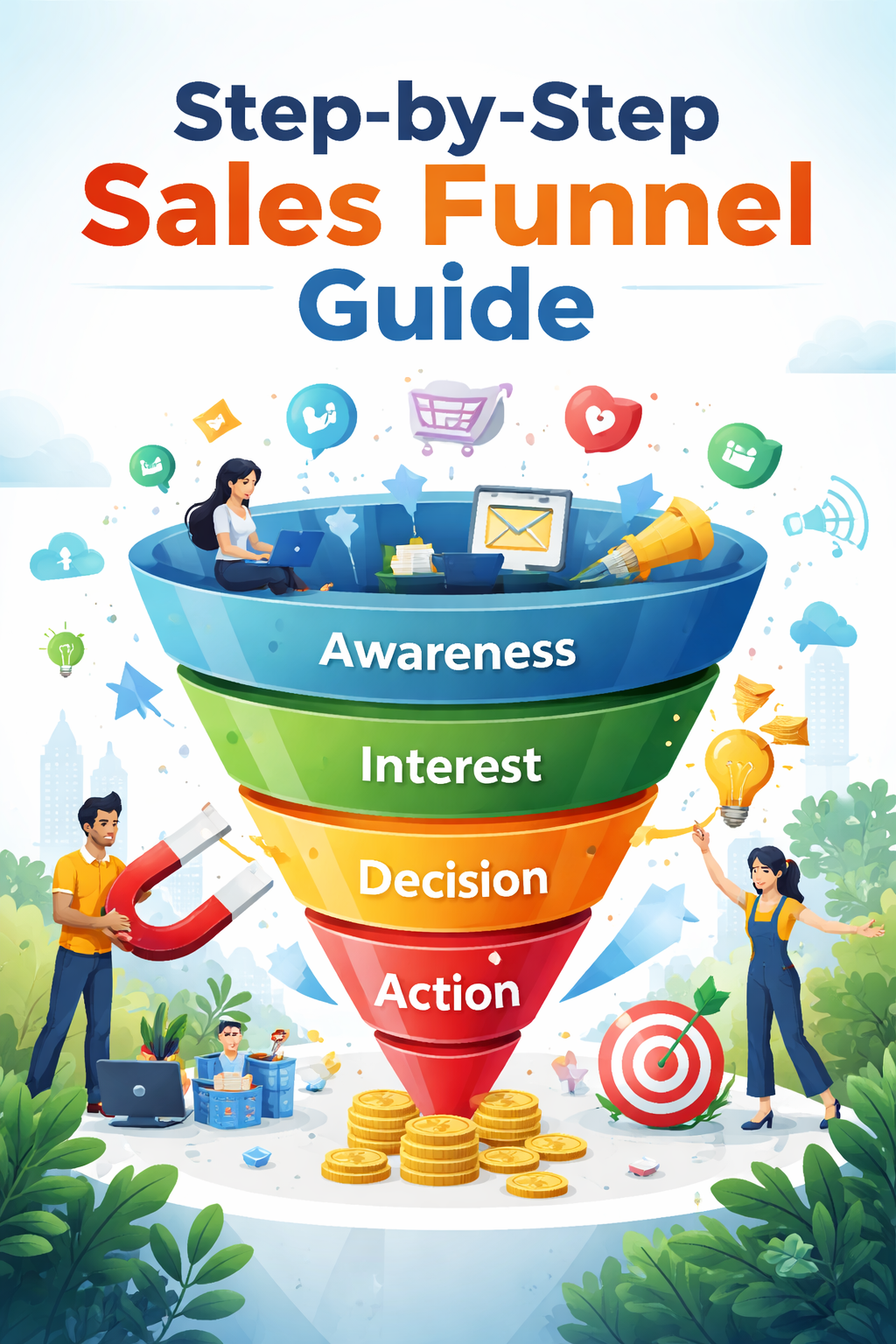
In today’s digital-first marketplace, businesses must guide potential customers through a structured journey before they make a purchase. This journey is known as a sales funnel. A well-planned funnel helps businesses attract the right audience, nurture leads, and convert them into paying customers. Creating a Sales Funnel is no longer optional in 2026—it is an essential strategy for sustainable growth and consistent revenue.
This step-by-step guide explains how businesses can succeed in Creating a Sales Funnel that not only attracts visitors but also converts them into loyal customers.This blog is a part of our Service Search Engine Optimization.
Table of Contents
Understand Your Target Audience
Before starting Creating a Sales Funnel, businesses must clearly understand who their ideal customers are. A funnel built without audience research will struggle to generate meaningful results.
Identify Customer Pain Points
Start by identifying the problems your potential customers face. When businesses understand these challenges, they can create solutions that truly matter to their audience.
Surveys, feedback forms, and market research are useful tools for discovering what your customers need and expect.
Analyze Audience Behavior
Studying user behavior helps marketers understand how visitors interact with their website and content. Data such as browsing patterns, time spent on pages, and click behavior can reveal valuable insights.
Understanding these patterns helps businesses design more effective strategies while Creating a Sales Funnel.
Create Awareness Through Valuable Content
The top of the funnel focuses on attracting attention and bringing potential customers into your marketing ecosystem.
Use Content Marketing to Attract Visitors
Blog posts, educational videos, infographics, and social media content help businesses introduce their brand to a wider audience. Instead of focusing on selling immediately, businesses should provide valuable information that solves problems.
When Creating a Sales Funnel, valuable content builds trust and positions your brand as an authority in your industry.
For additional insights on SEO and digital marketing, platforms like moz.
Optimize Content for Search Engines
Search engine optimization helps your content reach the right audience. Using relevant keywords, optimizing meta descriptions, and improving website structure can significantly increase visibility in search engines.
SEO ensures that the awareness stage of Creating a Sales Funnel consistently attracts organic traffic.
Build High-Converting Landing Pages
Once visitors reach your website, the next step in Creating a Sales Funnel is guiding them toward a specific action.
Design Focused Landing Pages
Landing pages should have one clear goal, such as encouraging visitors to sign up for a newsletter or download a resource. A well-designed landing page typically includes:
-
- A strong headline
- Clear value proposition
- Engaging visuals
- A compelling call-to-action
Removing unnecessary distractions helps visitors focus on the intended action.
Add Trust Signals
Trust signals such as testimonials, customer reviews, and security badges help visitors feel confident about interacting with your brand.
Trust plays a major role when Creating a Sales Funnel, especially during the early stages of lead generation.

Rinu Ann George
Rinu Ann George is an SEO Analyst at Upgraderz, specializing in search engine optimization, content strategy, and digital visibility.