
The Importance of Technical SEO for Modern Websites: Improve Performance & Rankings
Discover why Technical SEO for Modern Websites is essential for improving website performance, search visibility, and user experience. Learn how website speed optimization, Core Web Vitals, mobile-first design, indexing, and technical best practices help modern websites achieve stronger rankings and sustainable organic growth.

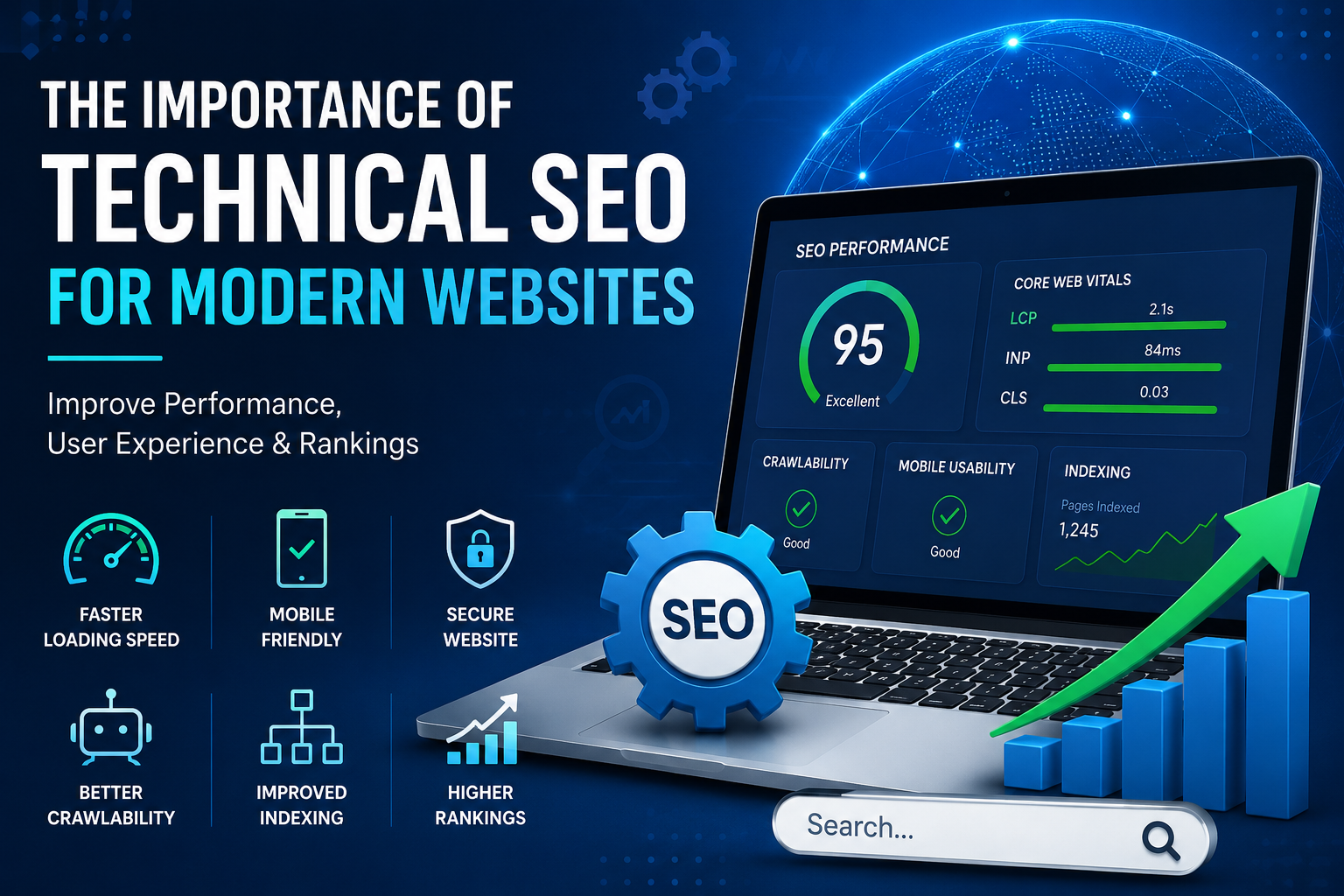
Modern websites compete in an increasingly competitive digital environment where visibility depends on more than content alone. Businesses that want better rankings, stronger engagement, and sustainable organic growth need a strong technical foundation. That is why Technical SEO for Modern Websites has become essential for achieving long-term search success.
Technical SEO improves how search engines crawl, understand, and index websites while enhancing speed, mobile usability, security, and user experience. When implemented correctly, it creates a foundation that supports content marketing, conversion optimization, and higher rankings.
This guide explores how technical SEO improves website performance and rankings while covering the most important optimization practices every website should implement.
Table of Contents
What Is Technical SEO
Technical SEO focuses on optimizing website infrastructure to improve search engine accessibility and website performance.
Unlike content-focused SEO, technical optimization improves the backend structure that helps search engines evaluate pages effectively.
Key areas include:
-
- Website Performance Optimization
- Website Speed Optimization
- Core Web Vitals Optimization
- Mobile-First Website Design
- Structured Data SEO
- XML Sitemap Optimization
- Website Crawlability
- Website Indexing
- HTTPS Website Security
- Site Architecture Optimization
- Search Visibility Improvement
Strong Technical SEO for Modern Websites ensures search engines can efficiently discover and rank important pages.
Why Technical SEO Matters for Website Rankings
Search engines prioritize websites that deliver excellent user experiences.
Even high-quality content can struggle to rank if technical issues affect accessibility or performance. According to Google Search Central, website performance, crawlability, and usability influence how search engines evaluate and surface content. Industry guidance from web.dev also highlights that fast, responsive websites contribute to better user experiences and stronger search performance.
Businesses that improve technical foundations create better experiences for both users and search engines.
Faster Website Loading Speed
Website speed directly impacts engagement and search performance.
Benefits include:
-
- Reduced bounce rates
- Better user experience
- Improved conversions
- Higher search visibility
Methods to improve website speed:
-
- Compress images
- Minify CSS and JavaScript
- Enable browser caching
- Improve server response times
- Use content delivery networks
Businesses implementing Technical SEO for Modern Websites often experience measurable improvements in website performance.
Mobile-First Website Design Improves Visibility
Mobile-first indexing means search engines primarily evaluate mobile versions of websites.
Modern websites should focus on:
-
- Responsive design
- Fast mobile loading
- Mobile-friendly navigation
- Optimized images
- Improved accessibility
Mobile SEO contributes significantly to user experience and rankings.
Applying Technical SEO for Modern Websites ensures better performance across devices.
Improve Website Crawlability and Indexing
Search engines must access pages quickly and efficiently.
Important optimization areas include:
XML Sitemap Optimization
XML sitemaps guide search engines toward important website pages.
Robots.txt Optimization
Helps control crawler access and improve indexing efficiency.
Website Architecture Optimization
Clear site structures improve navigation and support stronger search visibility.
For businesses looking to improve technical performance and organic growth, explore the SEO Services section for advanced optimization solutions.
You can also visit the Plugins section to improve functionality and enhance website performance.
These improvements strengthen Technical SEO for Modern Websites and support sustainable ranking growth.
Core Web Vitals and SEO Performance
Core Web Vitals measure real-world user experience.
Key metrics include:
Largest Contentful Paint (LCP)
Measures loading performance.
Interaction to Next Paint (INP)
Measures responsiveness.
Cumulative Layout Shift (CLS)
Measures visual stability.
Improving these signals supports:
-
- Better engagement
- Improved conversions
- Lower bounce rates
- Higher rankings
Modern businesses benefit significantly from Technical SEO for Modern Websites through improved website performance.
Structured Data SEO and Schema Markup
Structured data allows search engines to understand content more effectively.
Schema markup can improve:
- Rich results
- FAQ visibility
- Service page visibility
- Search appearance
- Click-through rates
Structured Data SEO has become an important part of modern optimization strategies.
Technical SEO Best Practices Every Website Should Follow
To improve search engine optimization results:
-
- Use HTTPS security
- Remove broken links
- Improve website indexing
- Reduce redirect chains
- Optimize metadata
- Compress large media files
- Perform technical website audits
- Improve page speed SEO
- Strengthen website structure
Businesses that invest in Technical SEO for Modern Websites build stronger long-term growth opportunities. According to Google PageSpeed Insights, improving website speed and user experience can support better website performance and overall search visibility.
Search engine success depends on more than content creation. Speed, crawlability, mobile usability, indexing, security, and performance all influence rankings.
By implementing Technical SEO for Modern Websites, businesses can improve website performance, increase search visibility, and create stronger digital experiences.
A technically optimized website builds the foundation required for sustainable organic growth and long-term search success.
As search algorithms continue to evolve, websites that prioritize technical improvements gain a stronger competitive advantage in organic search results. Regular technical audits, continuous performance monitoring, and ongoing optimization help maintain visibility and improve overall website health. Businesses should focus on enhancing Core Web Vitals, strengthening site architecture, improving page loading speed, and ensuring seamless mobile experiences across all devices.
Investing in technical SEO also supports better user engagement, increased trust, and higher conversion opportunities. When technical excellence is combined with valuable content and a clear SEO strategy, websites become more discoverable, scalable, and capable of delivering consistent long-term digital growth.

Rinu Ann George
Rinu Ann George is an SEO Analyst at Upgraderz, specializing in search engine optimization, content strategy, and digital visibility.