
Core Web Vitals Impact on Search Rankings: Why Website Performance Matters
Website performance has become a critical factor in modern SEO. Discover how the Core Web Vitals Impact on Search Rankings and learn how improving page speed, responsiveness, and user experience can strengthen search visibility, boost engagement, and support long-term organic growth.

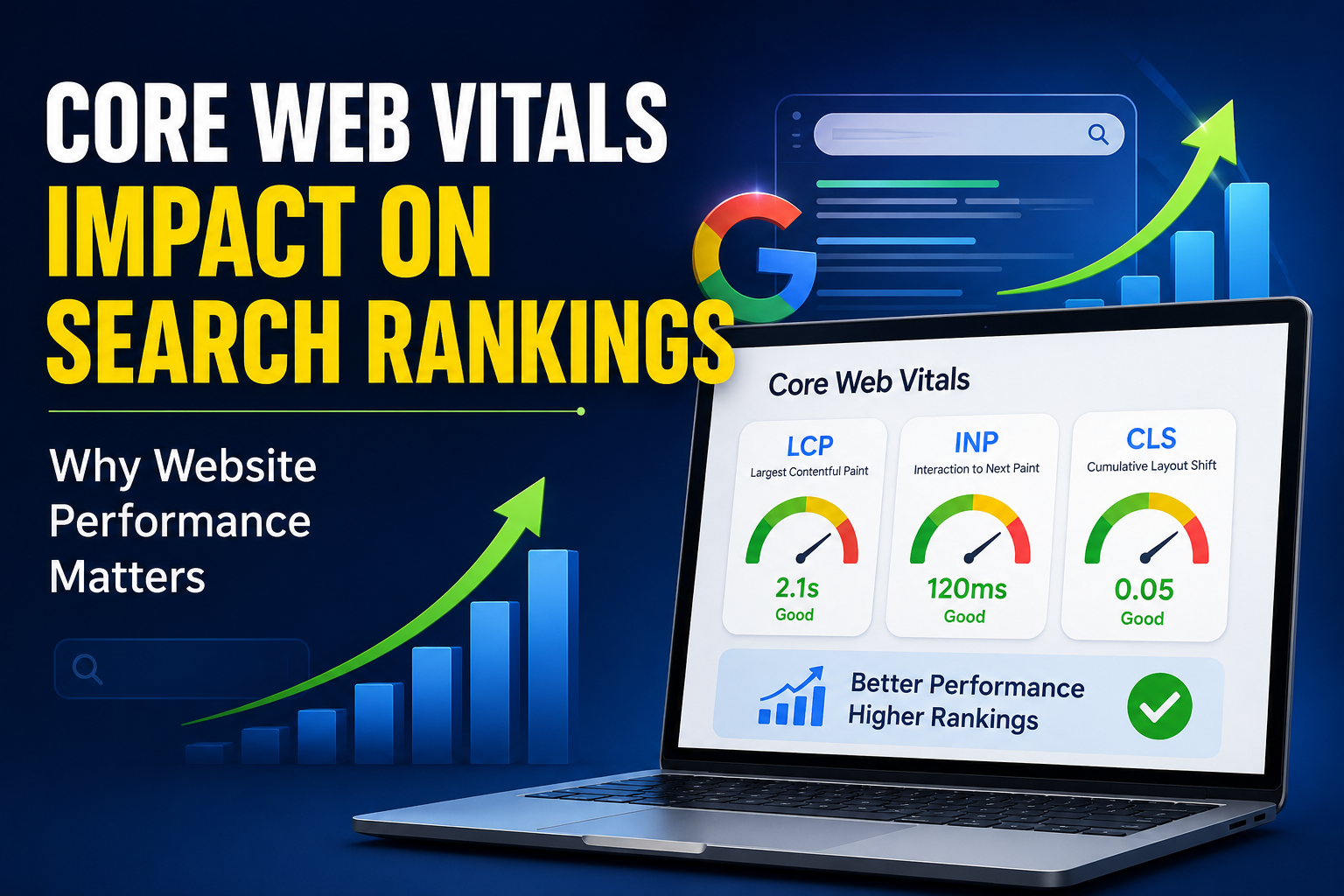
In today’s competitive digital environment, ranking on search engines requires more than publishing quality content. Website speed, responsiveness, and overall user experience now play a major role in visibility. This is where Core Web Vitals Impact on Search Rankings becomes an essential topic for businesses aiming to improve organic performance.
Google continues to prioritize websites that deliver smooth and efficient user experiences. Websites that load quickly, respond instantly, and maintain visual stability are more likely to keep visitors engaged and reduce bounce rates. Understanding and improving these performance signals can create long-term SEO advantages.
Table of Contents
What Are Core Web Vitals
Core Web Vitals are a set of website performance metrics introduced to measure real-world user experience and evaluate how users interact with webpages. Understanding the Core Web Vitals Impact on Search Rankings helps businesses recognize how loading speed, responsiveness, and visual stability influence both user satisfaction and overall SEO performance. These metrics determine whether a website experience feels fast, smooth, and reliable.
The three primary Core Web Vitals include:
-
- Largest Contentful Paint (LCP) – Measures loading performance and how quickly the main content becomes visible.
- Interaction to Next Paint (INP) – Measures responsiveness and how quickly a page reacts to user interactions.
- Cumulative Layout Shift (CLS) – Measures visual stability and prevents unexpected movement of page elements.
Together, these indicators influence how visitors experience your website and contribute to overall SEO effectiveness.
Why Website Performance Matters for SEO
The relationship between website performance and rankings has become increasingly important. Search engines aim to deliver pages that satisfy users quickly and efficiently.
The Core Web Vitals Impact on Search Rankings goes beyond technical measurements. Faster websites encourage users to stay longer, interact more, and complete actions more frequently.
Performance improvements often support:
-
- Lower bounce rates
- Increased average session duration
- Better mobile usability
- Higher engagement signals
- Improved conversion opportunities
When users remain engaged, search engines may interpret that behavior as a positive quality signal.
How Core Web Vitals Influence Search Visibility
Website performance directly affects user satisfaction, which influences SEO outcomes over time.
The Core Web Vitals Impact on Search Rankings becomes more visible when comparing similar websites competing for the same keywords. If content quality is comparable, a faster and more responsive experience can contribute to stronger search visibility.
Performance optimization helps search engines:
-
- Crawl websites more efficiently
- Improve indexing consistency
- Reduce loading friction
- Deliver better mobile experiences
Technical excellence supports stronger organic growth.
Secondary SEO Factors Connected to Core Web Vitals
Improving Core Web Vitals also strengthens several related ranking factors.
Mobile-First Experience
Since mobile-first indexing is standard, websites must perform well across smartphones and tablets. Responsive layouts and optimized assets improve usability.
Page Speed Optimization
Page speed remains one of the most discussed SEO topics because users expect instant loading experiences.
User Experience (UX)
Search performance increasingly aligns with user expectations. Better UX supports stronger engagement metrics.
Technical SEO Performance
Core Web Vitals should be part of a broader technical SEO strategy including:
-
- Website speed optimization
- Mobile responsiveness
- Image compression
- Browser caching
- Lazy loading
- Code minification
- Secure HTTPS implementation
- Efficient server response time
These improvements strengthen the Core Web Vitals Impact on Search Rankings and support sustainable growth.
Practical Ways to Improve Core Web Vitals
Businesses can take several actions to improve website performance.
Optimize Images and Media
Large files slow down page loading. Compress images and serve next-generation formats where appropriate.
Reduce Unnecessary JavaScript
Heavy scripts delay interactions and impact responsiveness.
Improve Hosting and Server Performance
Faster infrastructure reduces latency and improves loading consistency.
Enable Caching
Caching decreases repeat loading times and enhances overall performance.
Improve Website Design Structure
A well-built website architecture contributes significantly to performance and usability. Businesses looking to strengthen user experience and technical performance can explore professional Web Designing Services to create faster and more optimized digital experiences.
Enhance Website Functionality
Using well-managed tools and extensions can improve website efficiency while maintaining speed. Explore optimized Plugins Solutions that support functionality without compromising performance.
Applying these improvements increases the Core Web Vitals Impact on Search Rankings while supporting better user retention.
Tools to Measure Core Web Vitals
Regular performance monitoring is essential for maintaining SEO health.
Useful tools include:
These platforms help identify opportunities and track optimization progress.
The Future of SEO and Website Performance
Search algorithms continue evolving toward experience-focused evaluation. Businesses that prioritize technical excellence gain stronger opportunities for long-term visibility.
The Core Web Vitals Impact on Search Rankings is not about chasing a single metric—it is about building websites that users enjoy using. Better loading performance, improved responsiveness, and stable layouts contribute to stronger engagement and sustainable organic growth.
As competition increases, investing in performance optimization becomes essential. Organizations that continuously monitor and improve website speed will be better positioned to attract traffic, improve user satisfaction, and strengthen digital growth.
Ultimately, the Core Web Vitals Impact on Search Rankings highlights a simple reality: websites that perform better create better experiences—and better experiences support better SEO outcomes.

Rinu Ann George
Rinu Ann George is an SEO Analyst at Upgraderz, specializing in search engine optimization, content strategy, and digital visibility.